Choosing an emerald wedding band requires understanding the differences between Colombian and Zambian emeralds. These two origins produce the world’s finest emeralds, yet they possess distinct characteristics. Color, clarity, price, and durability vary between these sources. Therefore, couples must evaluate their priorities before making this significant purchase.
Understanding Emerald Origins and Wedding Band Significance
Emeralds symbolize growth, renewal, and enduring love in wedding jewelry. These precious gemstones have adorned royalty for centuries. Today, emerald wedding bands represent unique alternatives to traditional diamond rings.
Colombian and Zambian mines produce approximately 75 percent of the world’s emeralds. However, their geological formations create different crystal structures and color profiles. Additionally, mining practices and market positioning affect pricing and availability.
Colombian Emeralds: The Classic Choice
Colombian emeralds have dominated the luxury market for over 500 years. The Muzo, Chivor, and Coscuez mines produce legendary stones. These deposits formed in sedimentary rock under unique geological conditions.
Color Characteristics of Colombian Emeralds
Colombian emeralds display pure green with slight bluish undertones. This color results from chromium and trace vanadium in the crystal structure. The absence of iron creates their signature vivid, warm green appearance.
Fine Colombian emeralds show highly saturated color without secondary hues. Therefore, gemologists consider them the standard against which all emeralds are judged. The most prized stones exhibit “grass green” or “emerald green” coloration.
Lighter Colombian emeralds still maintain excellent color saturation. Even smaller stones suitable for wedding bands show impressive color intensity. However, top-color Colombian emeralds command premium prices in any size.
Clarity and Inclusion Patterns in Colombian Stones
Colombian emeralds typically contain three-phase inclusions called “jardin.” These internal gardens include liquid, gas, and crystal formations. Gemologists use these inclusions to verify Colombian origin.
Most Colombian emeralds show visible inclusions to the naked eye. However, these characteristics prove authenticity rather than diminish value. Additionally, inclusions create unique fingerprints making each stone individual.
Eye-clean Colombian emeralds remain extremely rare and expensive. For wedding bands, slight inclusions are acceptable and expected. Moreover, proper setting design can minimize the visibility of internal characteristics.
Price Range for Colombian Emerald Wedding Bands
Colombian emeralds cost 20 to 50 percent more than comparable Zambian stones. Premium color commands the highest prices in the market. A high-quality Colombian emerald wedding band typically ranges from $2,000 to $15,000 depending on size and quality.
Smaller accent stones for wedding bands offer more accessible price points. Three-stone designs or channel-set bands provide Colombian emerald options under $3,000. Nevertheless, center stones above one carat increase costs significantly.
Zambian Emeralds: The Modern Alternative
Zambian emeralds entered the international market in the 1970s. The Kagem mine produces the majority of Zambian stones today. These deposits formed in metamorphic rock creating different characteristics than Colombian emeralds.
Color Characteristics of Zambian Emeralds
Zambian emeralds display deep green with bluish or slightly darker undertones. Iron content in the crystal structure creates this distinctive coloration. Many observers describe Zambian emeralds as having “cooler” or more saturated color.
The blue-green hue appeals to buyers seeking deeper, richer tones. Additionally, Zambian emeralds often show more consistent color throughout the stone. This uniformity makes matching stones for wedding bands easier.
Some gemologists argue Zambian color rivals Colombian quality. However, traditional markets still favor Colombian warmth. Therefore, personal preference should guide color selection rather than origin alone.
According to GIA (Gemological Institute of America), emerald color depends on chromium, vanadium, and iron content, which varies by geographic origin and creates distinctive appearance characteristics.
Clarity and Inclusion Patterns in Zambian Stones
Zambian emeralds generally exhibit better clarity than Colombian counterparts. The formation process creates fewer inclusions on average. However, completely clean Zambian emeralds remain rare and valuable.
Zambian inclusions typically appear as needles or crystals rather than three-phase formations. These inclusions often scatter less light than Colombian jardin. Therefore, Zambian emeralds may appear slightly more transparent overall.
Wedding bands benefit from Zambian clarity advantages. Smaller stones show fewer visible inclusions, creating cleaner appearance in pavé or channel settings. Moreover, better clarity allows more design flexibility in vintage or intricate settings.
Price Range for Zambian Emerald Wedding Bands
Zambian emeralds offer excellent value compared to Colombian stones. Similar size and quality Zambian emeralds cost 20 to 50 percent less. A quality Zambian emerald wedding band typically ranges from $1,500 to $10,000.
The price advantage makes larger center stones more accessible. Additionally, couples can allocate more budget toward setting design or metal choice. Three-carat Zambian emeralds remain within reach for many buyers.
Direct Comparison for Wedding Band Selection
Visual Differences in Mounted Jewelry
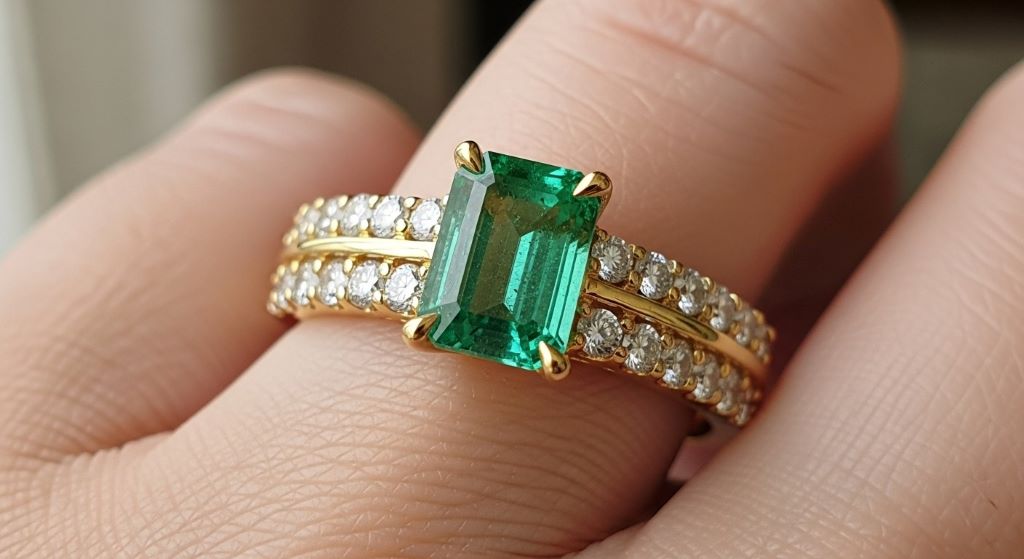
Colombian emeralds appear warmer and more vivid in yellow gold settings. The combination enhances their pure green coloration. However, white gold or platinum can make Colombian stones appear slightly darker.
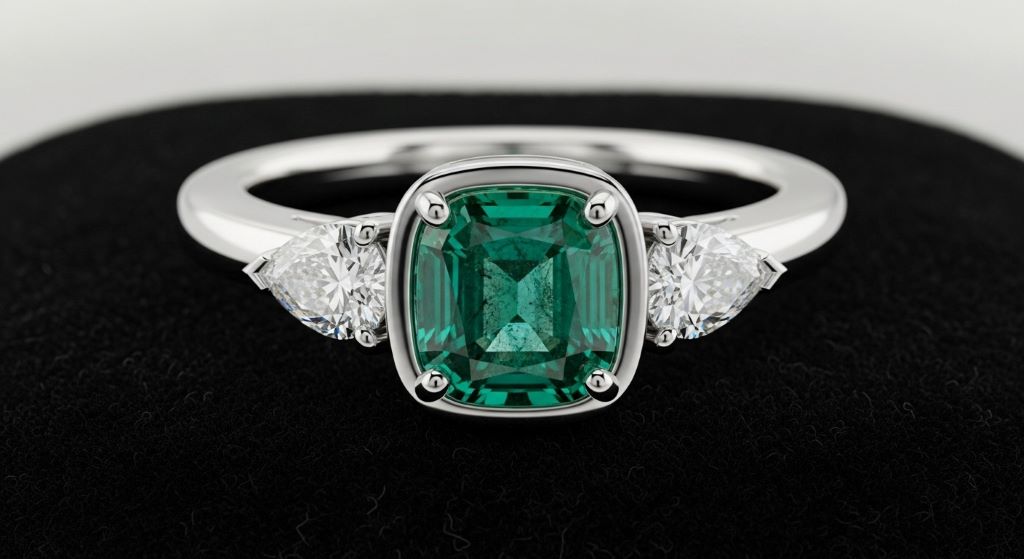
Zambian emeralds complement white metals beautifully. Their blue-green tones harmonize with platinum or white gold. Additionally, the deeper color creates striking contrast against light metals.
Both origins work well in rose gold settings. However, Colombian emeralds maintain better color balance. Zambian stones may appear slightly more teal against pink-toned metals.
Durability Considerations for Daily Wear
All emeralds rate 7.5 to 8 on the Mohs hardness scale. This makes them suitable for wedding bands with proper care. However, emeralds require more careful handling than diamonds or sapphires.
Colombian and Zambian emeralds show similar durability characteristics. Neither origin demonstrates superior toughness or resistance to breakage. Therefore, setting protection matters more than origin for wedding band longevity.
Bezel settings provide maximum protection for emerald wedding bands. Halo designs also shield stones from impact. Additionally, lower-profile settings reduce exposure to daily wear damage.
Treatment and Enhancement Practices
Most emeralds receive oil or resin treatments to enhance clarity. This practice remains standard and accepted throughout the industry. Both Colombian and Zambian emeralds undergo similar enhancement processes.
Cedar oil treatment fills surface-reaching fractures, improving appearance. This treatment requires periodic maintenance over decades. However, untreated emeralds command significantly higher prices.
Reputable jewelers disclose all treatments transparently. Certification from GIA or other laboratories documents enhancement levels. Moreover, treatment stability should factor into wedding band decisions for long-term wear.
According to Forbes, nearly all emeralds undergo clarity enhancement treatments that require disclosure and affect long-term jewelry care requirements.
Certification and Authentication for Wedding Bands
Independent gemological laboratories provide origin determination and quality assessment. GIA, AGL (American Gemological Laboratories), and Gübelin offer respected certification services. These reports document origin, treatment, and quality characteristics.
Colombian origin certification typically adds value to resale potential. However, certification costs $100 to $500 depending on stone size. Therefore, couples should weigh certification benefits against additional expenses.
Zambian emerald certification proves increasingly important as quality recognition grows. Documentation protects investment and aids insurance claims. Additionally, certification provides peace of mind regarding authenticity.
Making Your Decision: Colombian or Zambian
Personal Preference Should Guide Selection
Color preference remains the most important factor. Some buyers love Colombian warmth and tradition. Others prefer Zambian depth and value.
View stones in person whenever possible. Photography cannot capture subtle color variations. Additionally, observe emeralds in different lighting conditions including natural daylight and indoor lighting.
Consider which green tone complements your skin tone. Warmer Colombian greens suit some complexions better. However, cooler Zambian tones flatter others beautifully.
Budget and Value Considerations
Zambian emeralds deliver exceptional value for quality-conscious buyers. The same budget purchases larger or higher-quality Zambian stones. Therefore, couples maximizing carat weight should consider Zambian options.
Colombian emeralds justify premium pricing for tradition-minded buyers. The prestige factor matters to some purchasers. Additionally, Colombian stones may hold resale value better long-term.
Caring for Your Emerald Wedding Band
Remove emerald rings during household chores and physical activities. Chemical exposure damages treatments and stone surfaces. Additionally, ultrasonic cleaners can harm emeralds regardless of origin.
Clean emerald wedding bands with mild soap and lukewarm water. Use soft brushes to remove dirt from settings. Professional cleaning every six months maintains optimal appearance.
Have prongs checked annually by professional jewelers. Settings may loosen over time, risking stone loss. Moreover, re-oiling treatments every few years maintains emerald clarity enhancement.
Conclusion
Colombian and Zambian emeralds each offer distinct advantages for wedding bands. Colombian stones provide traditional prestige with warm, pure green color and established market recognition. However, Zambian emeralds deliver exceptional value with deeper blue-green tones and better clarity. Therefore, couples should prioritize personal color preference, budget constraints, and metal choice when selecting between these two outstanding origins. Both Colombian and Zambian emeralds create stunning wedding bands that symbolize enduring love and commitment for generations.
Frequently Asked Questions
Which emerald is better for a wedding band, Colombian or Zambian?
Neither origin is objectively better for wedding bands. Colombian emeralds offer traditional warm green color with prestige, while Zambian emeralds provide deeper blue-green tones with better clarity at lower prices. Personal color preference should guide your selection.
Are Zambian emeralds less valuable than Colombian emeralds?
Zambian emeralds typically cost 20 to 50 percent less than comparable Colombian stones. However, this reflects market positioning rather than quality differences. High-quality Zambian emeralds rival Colombian stones in beauty and durability.
Can jewelers tell the difference between Colombian and Zambian emeralds?
Experienced gemologists can identify origin through inclusion patterns and spectroscopic analysis. However, visual identification alone remains unreliable. Laboratory certification from GIA or AGL provides definitive origin determination for wedding band purchases.
Do Colombian emeralds last longer than Zambian emeralds in wedding bands?
Both origins show similar durability characteristics with Mohs hardness of 7.5 to 8. Neither lasts longer than the other with proper care. Setting protection and maintenance practices matter more than origin for wedding band longevity.
Should I get my emerald wedding band certified?
Yes, certification is recommended for wedding bands with emeralds over 0.50 carats. Laboratory reports document origin, treatment, quality, and authenticity. This documentation protects your investment and aids insurance claims while costing $100 to $500 depending on stone size.
Related Topics:
Top 5 Things to Consider When Choosing a Wedding Ring Set