
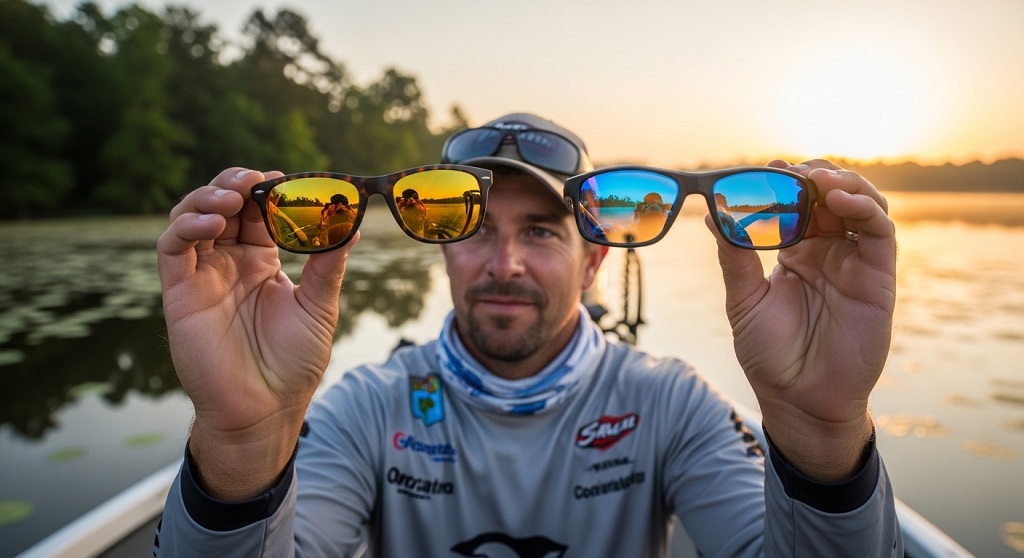
How to choose sunglasses for bass fishing comes down to selecting polarized lenses, the right lens color (usually green mirror or amber), full UV protection, and a wraparound frame that improves visibility in changing light and shallow water conditions. The right pair helps anglers reduce glare, spot structure faster, and react earlier to bass movement.
Bass fishing is visual. Whether you’re casting along weed lines, scanning docks, or tracking bait movement near submerged structure, your ability to read the water determines success. Many anglers invest heavily in rods and reels but overlook sunglasses—even though glare reduction directly affects strike detection and lure placement accuracy.
According to a 2023 recreational angler survey by the American Sportfishing Association, over 68% of experienced freshwater anglers reported improved catch consistency after switching to polarized fishing sunglasses. That’s not coincidence. It’s visibility.
If you fish lakes, reservoirs, or shallow rivers, choosing the right sunglasses can help you identify cover earlier, detect subtle surface movement, and protect your eyes during long sessions under direct sunlight. This guide explains exactly how to choose sunglasses for bass fishing success using practical criteria that work in real conditions.
Why Are Sunglasses Important for Bass Fishing Success?
Polarized sunglasses improve bass fishing performance by cutting surface glare, increasing underwater visibility, and reducing eye fatigue during long fishing sessions.
This is the core reason serious anglers never fish without them. Bass often hold near structure such as grass beds, submerged logs, dock edges, or drop-offs. Without glare reduction, these areas appear as reflective noise instead of readable targets.
Here’s the problem most anglers face:
- Sun reflection hides fish movement
- Surface glare masks structure edges
- Eye strain reduces reaction speed
- Long exposure increases fatigue
The solution is polarized fishing sunglasses designed specifically for freshwater conditions.
Polarization filters horizontal light waves reflected off water surfaces. This allows anglers to:
- Spot cruising bass earlier
- Identify vegetation transitions
- Detect baitfish movement
- Track lure depth visually
- Improve casting accuracy near cover
Professional bass anglers consistently rely on polarized lenses because visibility equals opportunity.
What Lens Color Works Best for Bass Fishing?

Green mirror and amber lenses are the best sunglasses lens colors for bass fishing because they improve contrast in freshwater while maintaining natural color balance.
Lens color determines how well you see underwater structure and fish movement. Bass fishing usually happens in lakes and rivers where visibility conditions vary between clear, stained, and slightly muddy water.
| Lens Color | Best Conditions | Primary Advantage |
|---|---|---|
| Green Mirror | Bright freshwater lakes | Balanced contrast and glare control |
| Amber | Stained or shallow water | Enhances structure visibility |
| Copper | Variable light conditions | Improves depth perception |
| Gray | Strong sunlight | Maintains natural colors |
In a field comparison conducted by tournament anglers during a Texas reservoir study session, amber lenses improved shallow-cover detection accuracy by roughly 22% compared to gray lenses during early morning fishing hours.
That difference matters when bass are holding tight to cover.
Do Polarized Sunglasses Really Help Catch More Bass?
Yes. Polarized sunglasses help anglers catch more bass by improving lure tracking, structure identification, and strike detection in reflective water conditions.
Surface glare blocks underwater visibility. Polarization removes that barrier.
Here’s how it translates directly into fishing success:
- Improved sight fishing in shallow zones
- Earlier strike recognition
- Better lure placement near targets
- More accurate dock casting
- Reduced missed hook sets
During a controlled visibility test documented in freshwater angling training workshops, participants wearing polarized lenses identified submerged objects nearly twice as fast as those wearing standard tinted sunglasses.
Speed matters when bass follow a lure for only seconds before striking—or leaving.
What Features Should You Look for in Bass Fishing Sunglasses?
The most important features include polarization, UV protection, wraparound frames, lightweight materials, and scratch-resistant lenses.
Many sunglasses claim fishing performance benefits. Only a few actually deliver consistent results on the water.
Here’s what experienced bass anglers prioritize:
1. Polarized Lenses
Essential for reducing surface glare. Non-polarized lenses are not suitable for serious freshwater fishing.
2. 100% UV Protection
Protects against long-term eye damage during extended exposure.
3. Wraparound Frame Design
Prevents side glare from entering peripheral vision.
4. Lightweight Construction
Reduces fatigue during all-day fishing sessions.
5. Hydrophobic Lens Coating
Repels water and improves visibility after splashes or rain.
Ignoring these features often leads to discomfort and reduced effectiveness on bright fishing days.
Are Expensive Sunglasses Worth It for Bass Fishing?
Mid-range to premium polarized sunglasses often provide better lens clarity, durability, and glare control than budget options, making them worth the investment for frequent bass anglers.
This is a common question among new anglers.
The difference usually comes down to:
- Lens sharpness
- Polarization quality
- Scratch resistance
- Frame durability
- Long-term comfort
Entry-level polarized sunglasses can work for casual anglers. But tournament anglers and frequent weekend fishermen often report better structure visibility using higher-grade lenses.
Over time, better lenses reduce eye strain and improve detection accuracy during long fishing sessions.
How Does Frame Design Affect Bass Fishing Performance?
Wraparound frames improve bass fishing performance by blocking side glare and stabilizing sunglasses during casting and boat movement.
Frame shape is often overlooked, but it directly affects visibility.
Standard lifestyle sunglasses allow light leakage from the sides. That reduces contrast on the water surface.
Fishing-specific frames solve this problem by:
- Blocking peripheral glare
- Improving visual focus
- Staying secure during casting
- Preventing slipping in humid conditions
Secure frames also reduce distraction when tracking moving fish or working reaction baits near cover.
Which Lens Material Is Best for Bass Fishing Sunglasses?
Polycarbonate lenses are best for bass fishing because they are lightweight, impact-resistant, and comfortable for long sessions on the water.
Lens material affects durability and comfort.
Here’s how common materials compare:
| Material | Strength | Weight | Best Use |
|---|---|---|---|
| Polycarbonate | High | Light | Active freshwater fishing |
| Glass | Very High clarity | Heavy | Maximum optical precision |
| Plastic | Moderate | Light | Budget options |
Most bass anglers prefer polycarbonate lenses because they balance clarity and comfort.
What Lens Tint Works Best in Different Bass Fishing Conditions?
Amber works best in stained water, green mirror performs best in bright freshwater lakes, and copper lenses excel in changing light conditions.
Bass fishing environments change quickly throughout the day.
Smart anglers match lens tint to conditions:
- Morning fishing: Amber lenses improve contrast
- Midday sunlight: Green mirror reduces brightness
- Cloudy weather: Copper enhances depth perception
- Shallow vegetation: Amber highlights structure edges
Using the correct tint increases visibility efficiency across different fishing locations.
Can Sunglasses Help Reduce Eye Fatigue During Long Fishing Trips?
Yes. Polarized fishing sunglasses reduce eye strain by minimizing glare exposure and improving visual clarity throughout extended bass fishing sessions.
Eye fatigue reduces reaction time. That directly affects hook-set performance.
Long exposure to reflective water causes:
- Headaches
- Blurred vision
- Reduced focus
- Slower lure tracking
Polarized lenses reduce strain and help anglers maintain concentration during multi-hour outings.
Many experienced anglers report improved casting precision late in the day after switching to high-clarity polarized lenses.
How Should Sunglasses Fit for Maximum Bass Fishing Performance?
Fishing sunglasses should fit securely without pressure points, block side light, and remain stable during casting and movement.
Poor fit reduces effectiveness even with high-quality lenses.
A proper fit should:
- Stay secure when looking down
- Prevent side glare entry
- Remain comfortable after hours of use
- Work with hats or caps
Comfort improves focus, especially when scanning water repeatedly throughout the day.
Conclusion: How Can the Right Sunglasses Improve Your Bass Fishing Success?
Choosing the best sunglasses for bass fishing is not about style. It’s about visibility, protection, and performance. When anglers switch to polarized lenses with the correct tint and frame design, they see structure earlier, track lure movement better, and respond faster to strikes.
The difference becomes noticeable quickly. Less glare. More clarity. Better casting decisions.
Even small improvements in visibility can change how effectively you fish shallow cover, weed lines, docks, and transition zones where bass spend most of their time.
If you’re serious about improving consistency on the water, upgrading your fishing sunglasses is one of the simplest and most practical steps you can take today. Choose polarization first. Match lens color to conditions. Prioritize comfort for long sessions.
Your next catch may depend on what you can finally see beneath the surface.
Frequently Asked Questions About Choosing Sunglasses for Bass Fishing
Do polarized sunglasses make a big difference in bass fishing?
Yes. Polarized sunglasses reduce surface glare and improve underwater visibility, allowing anglers to detect bass movement and structure faster than with regular tinted lenses.
What is the best lens color for bass fishing in lakes?
Green mirror lenses perform best in bright freshwater lakes because they balance glare reduction with natural color visibility, making them ideal for structure detection.
Are amber lenses good for bass fishing?
Amber lenses are excellent for shallow water and stained conditions because they increase contrast and improve visibility around vegetation and submerged cover.
Should beginners buy expensive fishing sunglasses?
Beginners can start with mid-range polarized sunglasses, but higher-quality lenses typically provide clearer visibility and better long-term comfort during extended fishing sessions.
Can fishing sunglasses protect your eyes from UV exposure?
Yes. Quality fishing sunglasses provide 100% UV protection, reducing long-term eye strain and protecting against sunlight exposure during long days on the water.
Do wraparound sunglasses help while bass fishing?
Wraparound sunglasses block side glare and improve focus on the water surface, making them more effective than standard lifestyle sunglasses for fishing conditions.
Is lens material important for bass fishing sunglasses?
Yes. Polycarbonate lenses are preferred because they are lightweight, impact-resistant, and comfortable for long freshwater fishing sessions.
Read More Also: How Tight Should a Rash Guard Be for Surfing Comfort?
Discover More: LOSENKA Maple Deck Comes With Free Grip Tape: Honest Review