
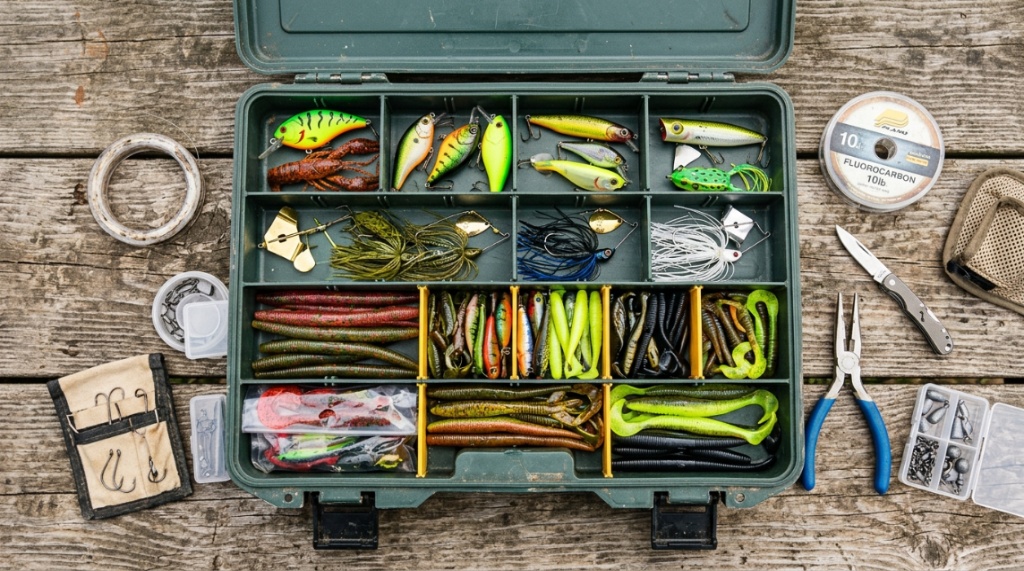
You finally bought that new tackle box, but your lures are still a tangled mess of hooks, split rings, and frayed line. You are not alone. Every angler has faced the frustration of dumping out an entire box just to find one specific crankbait. The good news is that you do not need to spend a fortune on custom foam inserts or high-end storage systems. With the right budget fishing lure kits and a bit of strategy, you can transform chaos into order. This guide walks you through exactly how to organize your lures using affordable solutions that actually work on the water.
What Makes a Fishing Lure Kit Budget-Friendly Without Sacrificing Quality?
A budget-friendly lure kit strikes a balance between price, durability, and storage capacity. You want a system that protects your hooks, prevents tangles, and fits inside your existing tackle bag. The cheapest option often fails because it uses thin plastic that cracks or hinges that break. Look for kits that use thick polypropylene or ABS plastic, even if they cost a few dollars more.
Key Materials to Look For
- Polypropylene sleeves: Flexible, crack-resistant, and lightweight. Great for soft plastics and jigs.
- ABS plastic boxes: Rigid and stackable. Ideal for hard baits like crankbaits and jerkbaits.
- Clear lids: Allows you to see contents without opening every box. This saves time on the water.
- Stainless steel hinges: Resist rust in saltwater environments. Cheaper kits often use aluminum that corrodes.
What to Avoid in Cheap Kits
- Thin, flimsy plastic that bends when stacked.
- Hinges that snap after a few uses.
- Latches that pop open when the box gets bumped.
- Dividers that shift around, allowing lures to mix together.
Why Does Organizational Strategy Matter More Than the Box Itself?
Anglers commonly buy a new tackle box expecting it to solve their mess, only to find the same chaos a week later. The truth is that no box can organize itself. Your system, not the container, determines whether your lures stay separated and ready to use. A solid organizational strategy reduces time spent searching for lures and extends the life of your tackle.
How Poor Organization Damages Lures
When hooks rub against each other in storage, they dull faster. Soft plastics get squished and deformed. Crankbait bills chip when they bang into metal snap rings. A well-organized kit prevents these issues, saving you money on replacements.
The Psychology of a Tidy Tackle Box
Anglers who know exactly where each lure is feel more confident and fish more efficiently. You stop wasting time digging through compartments and start fishing sooner. This mental clarity translates into more casts, better lure changes, and ultimately more fish.
How to Categorize Your Lures Before You Start Organizing
Before you place a single lure into a box, separate everything into categories. This step makes the entire process faster and ensures you create a system that actually matches how you fish. Group lures by type, size, and intended use.
Suggested Lure Categories
- Topwater baits: Poppers, walking baits, frogs, and buzzbaits.
- Crankbaits and jerkbaits: Hard baits with bills and treble hooks.
- Soft plastics: Worms, creature baits, swimbaits, and trailers.
- Jigs and spinnerbaits: Lead-head jigs, football jigs, and spinnerbaits with skirted hooks.
- Terminal tackle: Hooks, weights, swivels, snaps, and beads.
Why This System Works
When you group lures by type, you can quickly grab the box you need for the conditions. If the fish are hitting topwater, you pull one box. If you need to go deep with a jig, you grab a different box. This eliminates the need to dig through multiple boxes looking for specific lures.
Which Budget Lure Kit Works Best for Different Fishing Styles?
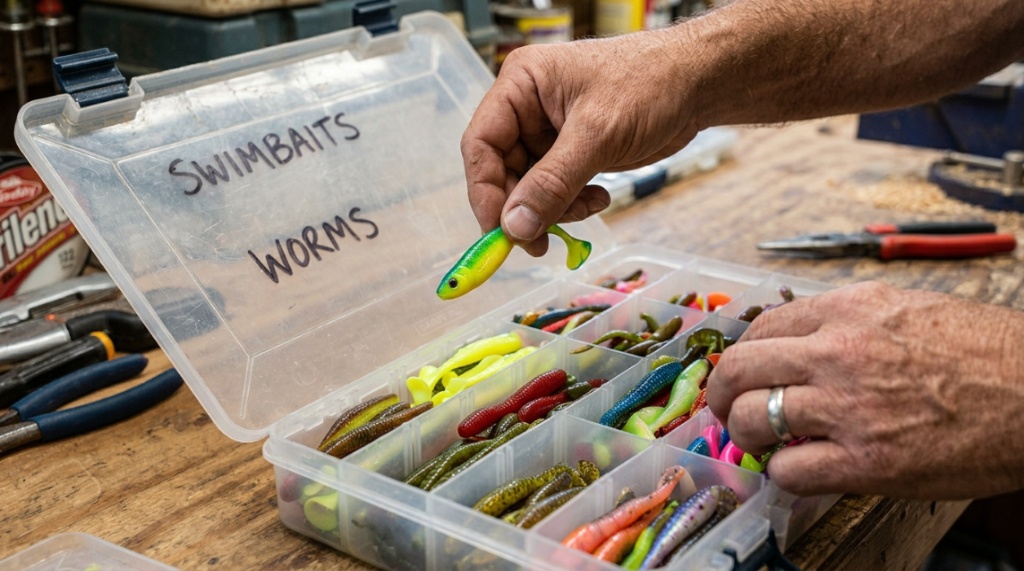
The ideal kit depends on whether you fish from a boat, kayak, or bank. A bank angler needs a compact, portable system. A boat angler can handle larger boxes. Understanding your specific needs helps you choose the right budget kit.
Best Kits for Bank and Kayak Anglers
For anglers who walk or paddle, a slim, waterproof box that fits in a backpack or crate is essential. Look for a kit with removable dividers that allow you to customize compartment sizes. A budget fishing lure kits designed for portability usually features a single layer of compartments, keeping weight low and access quick.
Best Kits for Boat Anglers
Boat anglers have more space and can use stackable two-layer boxes. These kits often hold four to six compartments per layer and fit nicely inside a larger tackle bag. The extra depth allows you to store bigger lures like deep-diving crankbaits and large swimbaits.
Can One Box Hold All Your Lures Effectively?
In most cases, no. Trying to cram every lure you own into one box leads to overcrowding, tangled hooks, and damaged tackle. Instead, adopt a modular system where you carry only what you need for a specific trip. This approach keeps your gear organized and your load manageable.
The Modular Kit Method
- Buy three to four small budget kits rather than one giant box.
- Label each kit by season or target species (bass, trout, panfish).
- Swap kits based on where you are fishing and what is biting.
- Keep a separate box for terminal tackle to avoid mixing small parts with lures.
When to Use a Single Large Box
If you fish from a kayak with limited deck space, a single large box with adjustable dividers might be your best option. Look for a box with at least 12 compartments and dividers that lock securely into place. This prevents lures from sliding into neighboring compartments during transport.
How to Arrange Lures Inside the Kit for Maximum Efficiency
Arrangement is everything. Even the best kit fails if you just toss lures in randomly. Follow a logical pattern that matches how you fish. Put lures you use most often in the most accessible compartments.
Step-by-Step Arrangement Guide
- Step 1: Place topwater baits in the top layer or front row. These are usually the first lures you try in the morning.
- Step 2: Put deep-diving crankbaits in the middle compartments. They are heavier and need more space to sit without tangling.
- Step 3: Store soft plastics in a separate flat sleeve to prevent them from getting crushed.
- Step 4: Place jigs and spinnerbaits along the side or back, where they can hang without hitting other lures.
- Step 5: Keep extra leader material and scissors in a small mesh pocket on the lid if available.
How to Prevent Hook Tangles in Shared Compartments
Use hook silencers or simple silicone tubing over treble hooks. This inexpensive trick prevents hooks from locking onto adjacent lures. You can also attach each lure to a small piece of foam or cork to keep them separated,Once you have your tackle squared away and you’re ready to hit the water, protecting your vision is just as important as choosing the right bait. To spot fish movements and underwater structure clearly, check out our guide on how to choose sunglasses for bass fishing like a pro angler for maximum glare reduction.
What Additional Accessories Extend the Usefulness of a Budget Kit?
A budget kit is just the starting point. Adding a few low-cost accessories can dramatically improve how well your kit performs. You do not need to buy a premium system to get premium results.
Five Affordable Accessories
- Hook covers: Silicone covers for treble hooks. A pack of 20 costs less than five dollars.
- Dividers: Extra plastic dividers allow you to customize compartment sizes further.
- Desiccant packs: Silica gel packs absorb moisture and prevent rust. Reuse them by drying them in the oven.
- Label maker or stickers: Labeling each compartment speeds up lure selection.
- Rubber bands: Wrap around boxes with loose lids to keep them closed during transport.
How to Modify Cheap Kits
If your budget box lacks secure dividers, use small strips of Velcro or soft foam to create friction that holds lures in place. This mod costs pennies and prevents the dreaded pileup that happens when you drop your tackle bag.
Is It Better to Store Lures by Color or by Depth Range?
Store lures by depth range and type first, then by color as a secondary sorting method. The most important factor in lure selection is how deep it runs, followed by its action. Color matters, but it is less critical than choosing the right depth and profile.
Depth-Based Sorting Example
- Shallow (0–4 feet): Topwater baits, shallow crankbaits, and light spinnerbaits.
- Mid-range (4–10 feet): Medium-diving crankbaits, jerkbaits, and weighted soft plastics.
- Deep (10+ feet): Deep-diving crankbaits, heavy jigs, and drop-shot rigs.
Color Sorting Within Depth Zones
Once you have depth zones established, sort by color families. Put natural patterns together (green pumpkin, watermelon, brown) and bright patterns together (chartreuse, white, orange). This makes it easy to experiment with different colors without leaving your depth zone.
How Often Should You Reorganize Your Lure Kit?
Reorganize your kit every three months or whenever you notice that lures are starting to mix between compartments. Seasonal changes are a good trigger. As you move from spring to summer fishing, swap out jerkbaits for topwater frogs and buzzbaits.
Signs It Is Time to Reorganize
- You find lures in the wrong compartment regularly.
- Hooks are rusty from moisture trapped inside.
- Soft plastics are sticky from sitting next to hard plastics.
- You cannot close the lid without forcing it.
How to Maintain Your Kit Between Trips
After each fishing trip, wipe down damp lures with a dry cloth. Open the box slightly to let air circulate. Remove any used or damaged lures immediately. This small habit prevents rust and keeps your kit ready for the next outing.
Frequently Asked Questions
How many lures can I fit in a typical budget lure kit?
Most budget kits with 12 to 18 compartments hold between 30 and 60 lures depending on size. Smaller lures like inline spinners take up less space, while big crankbaits may require one compartment each.
Can I use a budget kit for saltwater fishing?
Yes, but you must rinse all lures with fresh water after each trip and choose a kit made from rust-resistant materials. Plastic boxes work fine, but avoid metal hinges. Add desiccant packs to absorb moisture.
What is the best way to store soft plastics in a budget kit?
Store soft plastics flat in a ziplock bag or a dedicated plastic sleeve. Do not mix them with hard baits because the oils and colors can bleed. Keep each pack separated by type and color.
How do I prevent treble hooks from tangling?
Use silicone hook covers or slide a small piece of PVC tubing over each set of hooks. You can also attach lures to a foam strip inside the compartment to keep them from shifting.
Are expensive name-brand kits worth the extra money?
Not always. Many budget kits perform just as well as premium brands if you choose high-quality plastic and stainless steel hardware. The main advantage of expensive kits is better dividers and more precise compartment sizing.
Can I modify a cheap tackle box to hold larger lures?
Yes. Remove some dividers to create larger compartments. You can also cut foam blocks to size and insert them into open spaces to hold lures securely. Just ensure the box still closes flat.
What is the most common mistake anglers make when organizing lures?
Overstuffing compartments. Trying to fit too many lures into one space guarantees tangles and damaged hooks. Stick to the rule of one lure per compartment for hard baits with treble hooks.