
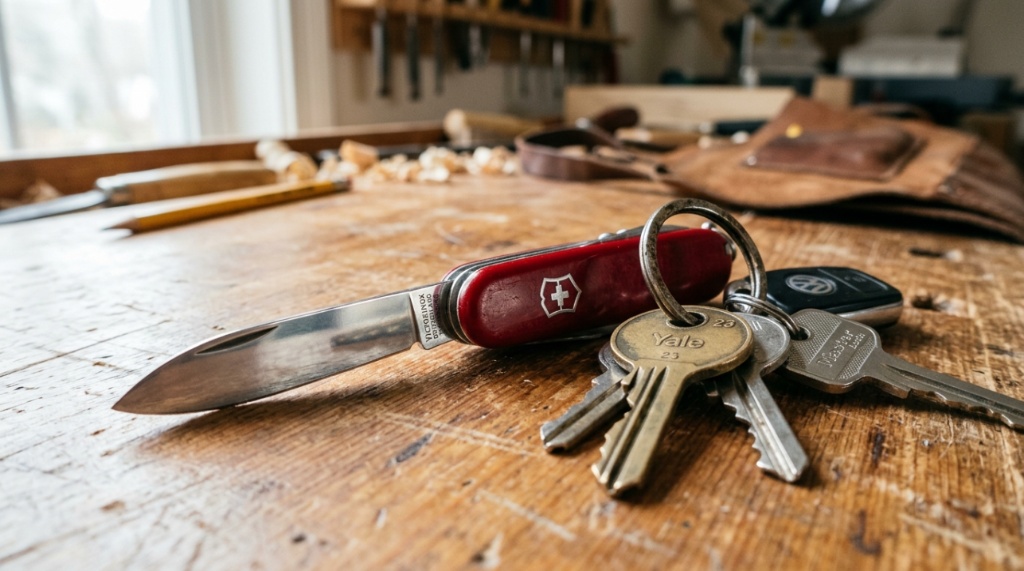
You have probably been there: standing at the checkout counter, eyeing that little red rectangle with the white cross, wondering if it is actually worth the money or just a novelty trinket. The truth is, a poorly made keychain multi-tool will let you down the moment you need it to tighten a screw or cut a loose thread. But the right one becomes an invisible extension of your pocket—always there, always ready. The market is flooded with cheap imitations that break under pressure, but choosing a genuine, well-engineered tool doesn’t have to be a gamble. In this guide, we will dissect exactly what makes a keychain Swiss Army knife last a lifetime, which materials matter, and how to avoid the pitfalls that turn a good tool into a paperweight.
Why Does the “Keychain Swiss Army Knife” Segment Confuse Buyers?
Most buyers assume that any small knife with multiple tools is a sound investment. That assumption leads to frustration. The keychain segment is packed with gimmicks, low-grade steel, and poorly designed locking mechanisms that fail during normal use. When you choose a keychain Swiss Army knife, you are not just buying a blade; you are investing in a system of tools that must withstand torsion, humidity, and daily rattling against your keys. The confusion arises because price and quality do not always align, and brand names often override objective specifications.
The Hidden Difference Between Pocket Knives and Keychain Models
Pocket knives are designed for heavy grip tasks, while keychain models prioritize compactness and convenience. A keychain knife must sacrifice size but cannot sacrifice the integrity of its pivot joint or the hardness of its steel. You need a tool that disappears in your pocket but appears instantly when you need it.
Why Brand Heritage Influences Lifespan
Brands with decades of experience in precision manufacturing understand tempering and edge retention better than newcomers. When you buy from a heritage manufacturer, you are paying for metallurgical expertise, not just a logo. That expertise translates directly into a tool that does not bend, chip, or rust prematurely.
The Reality of Daily Carrying on a Keyring
Your keys live in a hostile environment: they get tossed into bags, dropped on concrete, and exposed to moisture from your hands. A keychain knife must have a robust scale material that resists cracking and a blade that handles abrasion without losing its edge. A cheap tool will show wear within weeks, while a quality one will develop a patina but remain functionally perfect.
What Are the Essential Features of a Durable Keychain Swiss Army Knife?
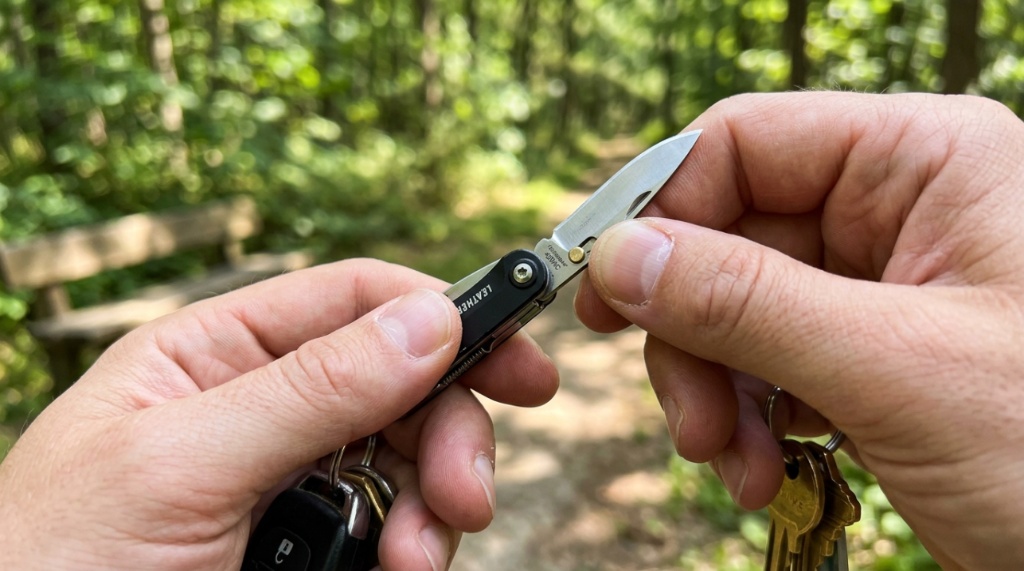
Durability is not a single feature; it is a combination of steel grade, scale material, pivot construction, and tool geometry. A durable keychain Swiss Army knife must have a blade made from rust-resistant steel (typically 1.4110 or similar), scales that are impact-resistant (often ABS or Cellidor), and a spring mechanism that retains tension across thousands of openings. You must also look for a tool that has a balanced weight distribution to prevent strain on the keyring attachment point.
Blade Steel: What Makes It Cut and Hold an Edge?
The steel must have a high chromium content for corrosion resistance and sufficient carbon for hardness. If the steel is too soft, the blade rolls; if too brittle, it chips. Look for a Rockwell hardness rating between 54 and 57 HRC for the best balance of sharpness and toughness in a small blade.
Scale Material: Is Cellidor Better Than ABS Plastic?
Cellidor is a glossy, cellulose-acetate-based material that offers a classic look and excellent grip. ABS plastic is more resistant to impact but has a duller finish. For longevity, Cellidor handles scratches but does not shatter. If you prefer a metal handle, look for anodized aluminum, which resists corrosion and adds negligible weight.
Tool Selection: Which Functions Matter Most?
Prioritize tools you will actually use: a blade, scissors, a nail file, and a screwdriver are the most practical. Gimmicky extras (like a ballpoint pen or a tiny flashlight) reduce the tool’s structural integrity because they introduce fragile moving parts. A tool with fewer, higher-quality functions will outlast one stuffed with novelties.
How Should You Inspect the Pivot and Locking Mechanism Before Buying?
The pivot is the heart of any folding knife. You should test the action: a good pivot opens smoothly with a satisfying click and holds the blade rigidly without lateral play. For a keychain knife, a slip-joint mechanism (with no lock) is standard, but it must have a strong backspring that prevents the blade from closing on your fingers. Avoid tools with loose pivots—they wear out quickly and cause the blade to wobble during cutting tasks, If you are upgrading your home security and utility alongside your everyday gear, check out this guide on having windows in garage doors to enhance natural light and curb appeal.
Testing the Backspring Tension
When you open the blade halfway, it should naturally snap into the fully open or fully closed position due to spring pressure. If it sticks in the middle, the spring is weak. A reliable backspring will provide resistance at 15 degrees from open and 15 degrees from closed, ensuring safe handling.
Signs of Poor Manufacturing to Look For
Check the alignment of the blade with the scales when closed. If the blade tip is off-center or scratches the liner, the tool was assembled carelessly. Also, inspect the edges of the tools: they should be cleanly machined without burrs. A rough edge indicates a rushed manufacturing process, which will lead to premature corrosion at stress points.
How Many Tools Does a Keychain Knife Really Need?
You want the “Goldilocks” configuration: not too few (why carry a knife that only cuts?) and not too many (why carry a brick on your keys?). The sweet spot is between 3 and 5 functions. This range ensures you have a usable blade, a cutting tool (scissors or a serrated edge), a driver, and a personal grooming tool. For most users, the Classic SD or Rambler configuration excels because it offers these core functions without unnecessary bulk.
The Case for Carrying Scissors Over a Serrated Blade
On a keychain, spring-loaded scissors are often more useful than a serrated knife. They allow for precise cuts (like trimming a hangnail or cutting a loose thread) where a serrated blade would struggle. Furthermore, scissors do not need sharpening as frequently as a serrated edge, reducing long-term maintenance.
Why a Nail File is a Survival Essential
A solid nail file provides a rough surface that can smooth wood, scrape off burrs, or act as a flathead screwdriver in a pinch. It is the most underrated tool on a keychain knife because it offers a flat, rigid surface that is perfect for prying and scraping without damaging the main blade.
Which Keychain Swiss Army Knife Size Is Right for Your Keyring?
Size is dictated by your tolerance for bulk in your pocket. Keychain models range from 58mm (the smallest) to 74mm (slightly larger). The 58mm models are perfect for minimalist carriers, while the 74mm models offer a better grip for heavier cutting tasks. You must match the size to your daily carry habits: if you often wear tailored pants, a 58mm is invisible; if you work in a warehouse, the added length of a 74mm might be necessary for better leverage.
Analyzing the 58mm vs. 74mm Platform
The 58mm platform is featherlight and perfect for urban EDC (Everyday Carry). The 74mm platform offers a slightly thicker blade and more robust tools (like a real Phillips screwdriver). If you need to tighten eyeglasses or open packages, the 58mm is fine. If you need to cut rope or turn a screw, size up.
Weight Considerations: Every Gram Counts on a Keyring
Keep the total weight under 30 grams (1 ounce). A heavier tool will stretch your keyring, wear out your pockets, and eventually cause the keyring attachment to fail. A light tool feels like a natural part of your keys, ensuring you do not leave it at home because it is annoying to carry.
How Does the Keyring Attachment Influence Long-Term Durability?
The attachment point is a ring or a slot that connects the tool to your keys. If this fails, you lose your knife. A poor attachment mechanism is a split ring that scratches the scales and weakens the frame. Look for a tool with a solid metal slot that integrates into the liner, or pair it with a high-quality split ring that is thick and rigid. Avoid attaching the knife directly to a flimsy keyring that will abrade the metal over time.
Protecting the Attachment Point from Wear
To prevent the slot from widening, use a nylon or paracord lanyard split and bind far away from the pivot. This keeps the metal-to-metal contact minimal and prevents the keyring from acting like a file against the knife’s body. This simple step extends the lifespan of your tool by years.
When Should You Choose a Metal-Scale Model Over a Plastic One?
If you work in an industrial environment or frequently expose your keys to solvents, choose a metal-scale model (usually aluminum). These are more robust against shocks. However, plastic scales are perfectly fine for office environments and casual use because they offer better grip when hands are wet. Your decision hinges on the environment your keys will face daily.
Pros and Cons of Aluminum Scales
Aluminum models are heavier and warmer to the touch but have a premium, rugged feel. They also tend to have a matte finish that resists scratching better than glossy plastic. The downside is that aluminum can dent if dropped on a hard surface, whereas plastic will flex and bounce.
Pros and Cons of Standard Cellidor Scales
Cellidor is lightweight, offers a classic glossy look, and is non-conductive (safer for electric work). It does scratch easily and can become brittle if exposed to extreme cold. For most everyday users, Cellidor is the perfect balance because it is tested to resist impact but offers the traditional aesthetic people want from a Swiss knife.
How to Maintain Your Keychain Swiss Army Knife for Lifelong Service
Maintenance is not optional. A knife that is left dirty and damp will rust at the joints, making the spring sluggish and the blade dull. You must clean, lubricate, and dry your knife on a regular schedule. The beauty of a keychain knife is that maintenance takes less than five minutes.
Cleaning: Step-by-Step for Removing Debris and Moisture
Open all tools and use a can of compressed air to blow out lint and dust. If the knife has been exposed to sticky substances, soak it in warm, soapy water for a few minutes. Rinse with fresh water and shake off excess. Immediately dry with a soft cloth and allow it to air dry completely before closing it.
Lubrication: Which Oils Are Safe for Food Contact?
Avoid petroleum-based oils if you will use the knife for food prep. Use mineral oil or a specialized food-grade synthetic lubricant. Apply a small drop to the pivot and open/close the blade several times to distribute the oil. Wipe off any excess to prevent it from attracting dust.
Sharpening a Small Blade Without Ruining It
Keychain knives have very small blades, making them difficult to sharpen on a standard whetstone. Use a ceramic rod or a honing steel—aim for about 15-20 degrees. Do not use an electric sharpener; they remove too much material and will destroy the blade geometry. For micro-serrated edges, use a specialized ‘V’ sharpener that fits the tiny teeth.
Is It Worth Investing in a Multi-Tool Over a Simple Knife?
Yes, if you value versatility. A simple folding knife only cuts, but a multi-tool adds a screwdriver, scissors, and a file. While a dedicated multi-tool (like a Leatherman) is bigger, a keychain model offers just enough utility to solve daily problems without carrying a heavy toolbox. The investment is worth it because the cost per tool is minimal compared to buying separate devices.
The “Travel” Factor: Airline Restrictions and Legal Carry
If you fly frequently, remember that most keychain knives with bladeless tools (like the Manager model) are often allowed by TSA, whereas anything with a blade is restricted. If you purchase a knife, ensure you know your local laws. Many 58mm models have blades under 2 inches, making them legal in most jurisdictions, but you must check the specific regulations for your city or country.
Table: Quick Comparison of Popular Keychain Models
To help you visualize the differences, here is a comparison of the most durable models on the market.
| Model | Length (mm) | Key Tools | Handle Material | Weight (g) |
|---|---|---|---|---|
| Classic SD | 58 | Blade, Scissors, Nail file, Toothpick | Cellidor | 21 |
| Rambler | 58 | Blade, Scissors, Phillips driver, Cap lifter | Cellidor | 22 |
| Manager | 58 | Blade, Scissors, Nail file, Pen, Toothpick | Cellidor | 25 |
| Alox Classic | 58 | Blade, Scissors, Nail file | Aluminum | 21 |
| Bantam (64mm) | 64 | Blade, Cap lifter, Screwdriver | Cellidor | 16 |
This table is a starting point. Look for the combination of tools that you will realistically use.
Why Pay More for a Name Like Victorinox or Wenger?
You are paying for quality control and warranty. A genuine Swiss Army Knife brand tests each tool for tensile strength, corrosion resistance, and spring tension. The “no questions asked” warranty service is also valuable—if a spring breaks after years of hard use, they will often repair it for free or at a minimal cost. Cheaper brands lack the distribution network to support this back-end service, so when they break, they are destined for the trash.
Warranty and Repair Networks: What to Expect
Authorized brands hold up to a 40-year warranty. You should verify that the brand you choose has a service center in your country. If shipping the knife back costs more than a new one, the warranty is worthless. Check online reviews to see if users report easy warranty claims versus a nightmare process.
Frequently Asked Questions
Can a keychain Swiss Army knife be used as a primary self-defense tool?
No. A keychain knife lacks the blade length and grip strength needed for effective self-defense. It is a utility tool for cutting rope and opening boxes. Relying on it for defense is dangerous; use it solely for practical tasks.
How often should I oil the pivot on my keychain knife?
Oil it every two to three months if used daily. If you get it wet or expose it to high humidity, oil it immediately to push out moisture. A single drop of mineral oil is sufficient.
Are knife blades on keychain models legal everywhere?
No. Laws vary by state and country. Many jurisdictions restrict blades over 2 inches. Always check local laws regarding blade length and carry restrictions before attaching a knife to your keychain. The 58mm models are generally safer legally.
Will the scissors on a keychain knife cut through wire?
No. Scissors on these models are designed for paper, thread, and thin materials. Attempting to cut wire will nick the blades and ruin them instantly. Use the dedicated wire cutter on a larger multi-tool instead.
How do I remove rust from a stainless steel blade?
You can use a fine grit abrasive (like a pencil eraser or 0000 steel wool) to gently rub the rust spot. For deep pits, use a rust eraser. After cleaning, dry and oil immediately to prevent recurrence.
Is it better to buy a knife with “one-hand opening” for a keychain?
No. One-hand opening features require a flipper or a thumb stud that takes up space and creates snag points on a keychain. The classic two-hand nail nick is safer and more reliable for such a small tool.
Can I put a keychain knife in my carry-on luggage for a flight?
Generally, no. Most airlines prohibit any sharp objects with blades in cabin baggage. Even if the blade is shorter than 2 inches, it is still considered a weapon by TSA agents. Place it in checked baggage or leave it home to avoid confiscation.
Conclusion: Your Keychain Deserves an Heirloom, Not a Disposable
Choosing a keychain Swiss Army knife is about rejecting the throwaway culture of cheap, breakable gadgets. You are selecting a companion that will cut packages, tighten screws, and clean your nails for decades if you choose wisely. Focus on the steel, the spring, and the scale material—ignore the cap-lifter that you will never use. Check the pivot for smoothness, feel the tension of the spring, and verify the warranty. By following the guidance in this article, you are not just buying a tool; you are ending the cycle of owning a heap of broken, cheap metal in your drawer. Make the choice today to invest in a reliable little blade that will outlive your current set of keys. You will wonder how you ever managed without it.