

When hitting the waves, every piece of surf gear matters. A rash guard that’s too loose drags you down, while one too tight restricts movement and ruins your session. So, how tight should a rash guard be for surfing? It should fit snugly against your skin like a second layer—with just enough give to allow full mobility and avoid chafing.
Choosing the right rash guard fit is crucial for peak surfing comfort and performance. Let’s uncover how your rash guard should fit, why it matters, and how to avoid common mistakes that could turn your perfect beach day into a struggle.
Why is Rash Guard Fit Important for Surfing?
Rash guard fit impacts both comfort and performance in the water. A poor fit leads to chafing, drag, or limited movement. The right fit keeps you protected from sun, surf, and board rash, while allowing full flexibility for paddling and popping up.
Surfing puts your body through constant, dynamic movement. Rash guards are designed to protect your skin from irritation caused by saltwater, sand, and surfboard friction. A rash guard that fits properly reduces the risk of painful rashes or uncomfortable bunching, especially during long sessions.
Additionally, a good fit ensures the fabric stays put and doesn’t slow you down. Too loose, and the material can balloon with water, creating drag. Too tight, and it’s liable to restrict blood flow or tear under pressure. Fit is the unsung hero of hassle-free surfing.
How Tight Should a Rash Guard Be for Surfing?
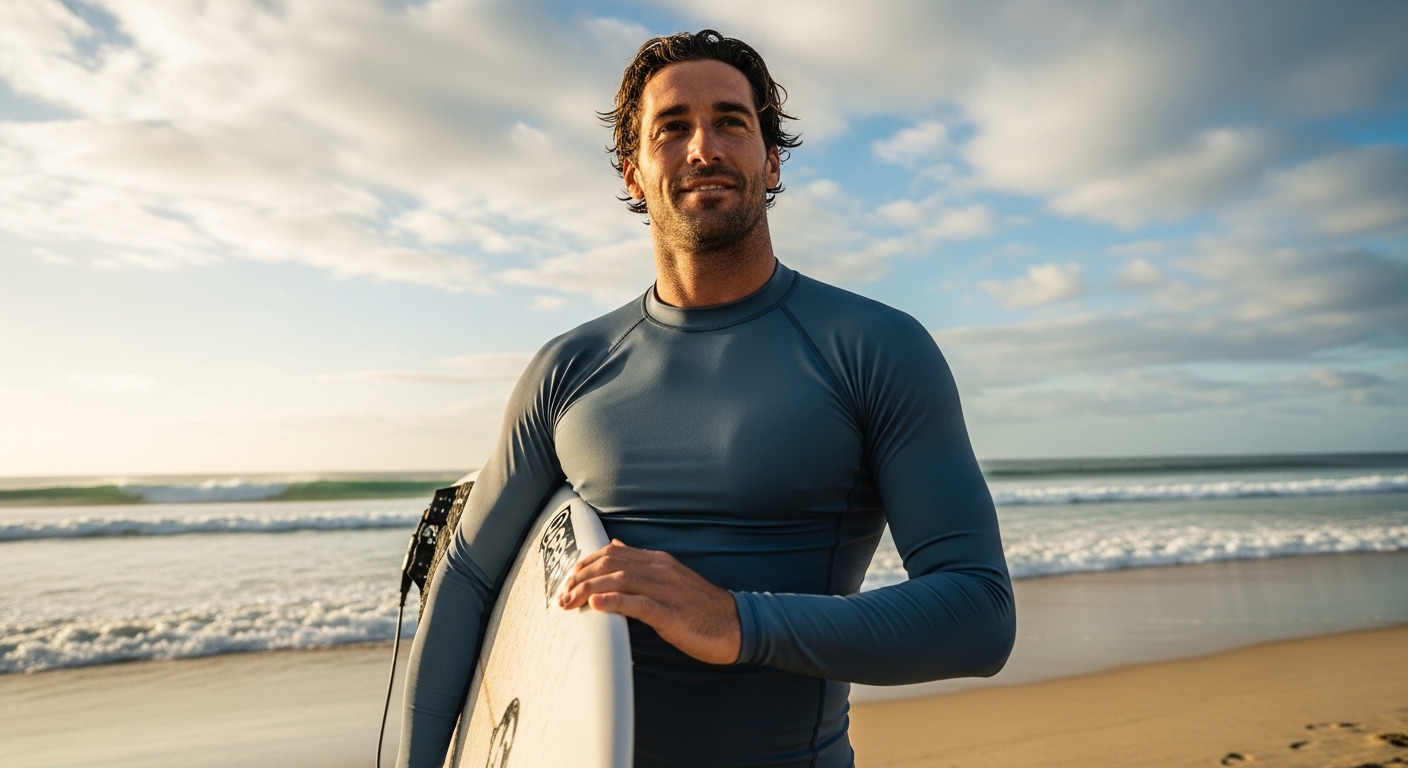
A rash guard should be form-fitting but not restrictive. It should sit snugly against your skin to prevent water drag, yet have enough elasticity that you can move, stretch, and paddle without discomfort or pinching. Aim for a “second skin” sensation—secure but flexible.
When you pull on your rash guard, you shouldn’t see significant wrinkles or sagging at the torso, chest, or arms—the fabric should smoothly follow your body contours. As you rotate your shoulders and reach overhead (as in paddling), the sleeves and torso should stay in place, not crawl up your back or expose skin.
- If you feel constricted, try one size up or check for different brands with more forgiving cuts.
- If the fabric billows or sags, go down a size for a more performance-driven fit.
- Test the fit by mimicking paddling motions and raising your arms to ensure full range of movement.
Remember, the right balance means safety, sun protection, and maximum wave fun.
What Problems Happen If a Rash Guard Is Too Loose?
A loose rash guard drags in the water, causes chafing, and often exposes your skin to sun and board. Overly loose fits ruin the hydrodynamics necessary for peak surfing performance and leave you unprotected in key areas.
When water flows between your skin and a baggy rash guard, the resulting suction slows you down and can make paddling harder. Excess fabric can also bunch up under your armpits, chest, or waist, leading to uncomfortable abrasions or “board rash.”
- Increased drag: Baggy material fills with water, making you work harder to paddle or pop up.
- Chafing risk: Loose fabric rubs and shifts, irritating your skin with each stroke.
- Poor coverage: A sagging fit rides up, exposing you to UV rays and waxy surfboard surfaces.
- Lack of protection: Rash guards don’t do their job if they’re not where you need them.
To prevent these issues, always choose a snug fit designed for active surfing.
Can a Rash Guard Be Too Tight for Surfing?
Yes, a rash guard can be too tight. Overly tight fits restrict movement, hinder breathing, cause discomfort, and can even affect circulation. A rash guard should never pinch, dig in, or limit your natural range of motion when you’re surfing.
When trying on rash guards, check for excessive compression at the neck, wrists, and torso. If you notice indentations on your skin, or if breathing and paddling feel constrained, size up. Tightness may also cause the seams to press deeply into your skin, increasing the risk of irritation during long sessions.
Remember, the goal is comfort—not to squeeze every ounce of air out. A performance snug is good. Uncomfortable squeeze is not. Always perform a few stretches and paddle-mimicking movements when testing fit.
How Do You Choose the Right Rash Guard Size?
To choose the right rash guard size, consult the brand’s sizing chart and match it to your chest, waist, and arm measurements. Prioritize fit over vanity sizing, as surf brands differ. Try before you buy, and when in doubt, opt for a snug fit rather than loose.
Here’s a step-by-step approach to getting your ideal rash guard fit:
- Measure your chest, waist, and sometimes arm length with a tape measure.
- Compare your measurements to the brand’s size guide—sizes can differ between Australian, European, and American brands.
- Try on the rash guard and check in the mirror for a smooth, contoured fit that hugs the body without strain.
- Move your arms, twist your torso, and mimic duck-dives or paddling. The garment should follow you without shifting or cutting off movement.
- If between sizes, most surfers recommend going with the smaller option, as neoprene and spandex tend to stretch in the water.
If shopping online, read customer reviews for feedback on fit and stretch. Some brands run large, while others offer athletic cuts. Know your dimensions for the best results.
What Material Qualities Make for a Comfortable Rash Guard Fit?
The most comfortable rash guards are made from stretchy, quick-drying, and breathable materials like spandex blends or performance polyester. Flat-lock stitching, UV protection, and soft linings add extra comfort and durability in the surf.
Material composition is critical for performance. Top-quality rash guards use blends of polyester, nylon, and spandex (also called Lycra or elastane) for maximum flexibility and a smooth feel on the skin. The higher the spandex content, the better the fit and mobility.
- Flatlock stitching: Prevents seam irritation and reduces chafing on long sessions.
- Moisture-wicking fabric: Draws water and sweat away, keeping you drier and more comfortable.
- UPF 50+ protection: Blocks harmful sun rays, protecting your skin during hours in the water.
Choose soft-touch fabrics with “four-way stretch” for effortless movement. Quick-dry technology helps when transitioning between surf and sand. Invest in a trusted brand for durability.
Is There a Difference in Fit Between Men’s and Women’s Rash Guards?
Yes, men’s and women’s rash guards are tailored differently to accommodate body shapes. Women’s fits often contour the waist and bust, while men’s are straighter through the torso. Both should fit equally snug and comfortable for surfing.
For women, rash guards often have a more tapered waist and may include additional stretch panels around the bust and hips. Men’s styles are broader at the shoulders and more even through the midsection. The goal in both cases is a close fit that doesn’t restrict movement.
Many brands offer unisex surf rash guards as well, but these may not provide the perfect anatomical fit for everyone. Always check the product description to ensure you’re buying the right style for your body shape, and try on a few types if possible.
How Does a Rash Guard Fit Compare to a Wetsuit or Swim Shirt?
Rash guards fit tighter than swim shirts but looser than wetsuits. They’re designed for a “second skin” feel—compressive, but not restrictive. Wetsuits are ultra-snug for insulation, while swim shirts tend to have a relaxed, casual fit.
| Surf Wear | Fit Description | Best Use |
|---|---|---|
| Rash Guard | Snug, form-fitting, stretchable | Chafe protection, sunblock, flexibility |
| Wetsuit | Very tight, compressive, thick neoprene | Thermal insulation, buoyancy, full-body coverage |
| Swim Shirt | Loose, relaxed fit, light fabric | Casual swimming, pool use, low-abrasion water sports |
Rash guards have a balanced fit: not as compressive as wetsuits, but athletic enough to stay streamlined in big surf.
What Are Signs You’ve Found the Perfect Rash Guard Fit?
The perfect rash guard feels like a second skin—no sagging, no pinching, and complete range of motion. The sleeves and hem stay put while you move, and you barely notice it in use. Comfort and protection work together seamlessly.
- No gathering, sagging, or water pooling when in use.
- No pinching, digging, or pressure marks after wearing.
- Easy arm and shoulder movement during paddling or pop-ups.
- Flat, soft seams that don’t irritate your skin.
- Fabric springs back after stretching, showing lasting fit and quality.
A rash guard that checks all these boxes means less time fidgeting and more time catching waves.
How Can You Care for Your Rash Guard to Maintain Its Fit?
Rinse with fresh water after each surf, avoid direct sunlight drying, and wash by hand with gentle detergent. These steps preserve the elastic fibers, prevent odors, and ensure the snug fit lasts longer—helping your rash guard deliver consistent comfort session after session.
Follow these care basics:
- Rinse thoroughly after each use to remove salt, sand, and sunscreen.
- Hand wash in cool water using mild soap—never use bleach or fabric softeners.
- Gently squeeze out excess water—don’t wring or stretch the fabric.
- Hang dry in the shade, avoiding direct sunlight which can break down elastic fibers.
- Store your rash guard flat or folded when dry—never balled up or damp.
With proper care, your rash guard stays form-fitting and ready for wave after wave.
Conclusion: Find the Perfect Rash Guard Fit for Unmatched Surfing Comfort
The answer to how tight should a rash guard be for surfing is simple: snug, streamlined, and never restrictive. The perfect fit protects your skin, enhances your performance, and lets you focus purely on the ride—not your gear.
Invest time in finding the right fit and material. It will transform your surf sessions, save your skin, and boost your confidence on every wave. Ready to upgrade your surf gear? Explore top-rated rash guards that offer comfort, protection, and style for all-day fun in the ocean. Adventure is waiting—get equipped for it!
Frequently Asked Questions (FAQ)
Do rash guards stretch out over time?
Yes, rash guards can stretch out, especially if made with a high spandex or elastane content. With regular use and exposure to saltwater, the fibers may lose elasticity. Proper care, such as rinsing in cold water and avoiding hot sun drying, helps preserve their form-fitting nature.
Can I wear a loose rash guard for casual beach activities?
Loose rash guards are fine for light swimming, snorkeling, or general beachwear, but not ideal for surfing. For high-motion water sports, a snug fit is better to prevent drag and maximize protection.
Does a rash guard provide warmth like a wetsuit?
Rash guards offer minimal warmth and are primarily for sun and rash protection. Wetsuits, made from thick neoprene, provide thermal insulation for cold water. If warmth is needed, look for thermal rash guards or layer under your wetsuit.
Should kids’ rash guards fit as tightly as adults’?
Yes, children’s rash guards should also fit snugly but not restrictively. Kids are active in the water and need the same chafe and sun protection as adults. Always refer to size guides and prioritize comfort over room to grow for safety.
Can I wear a rash guard under my wetsuit?
Absolutely! Many surfers wear rash guards beneath wetsuits for added comfort and to reduce chafing. Choose a thin, seamless, and tight-fitting rash guard that won’t bunch up under the neoprene.
How do I know if my rash guard is too small?
If you struggle to get it on or off, experience cutting at the seams, or have restricted breathing or movement, it’s too small. The fabric shouldn’t be translucent or overly stretched when you wear it. Sizing up is best in this case.
Is it okay for my rash guard to feel tighter when dry?
Yes. Rash guards naturally feel a bit tighter when dry because the fibers relax and stretch out in water. A slightly snug dry fit typically means a perfect “second skin” feel once wet—just ensure it’s never uncomfortably tight.
Read More Also: Red and Yellow Chapter 8 Chevrons – Design Visibility Logic
Find out: How to Maximize the ROI of Ceramic Coating: Prep, Maintenance, and Reapplication Tips