
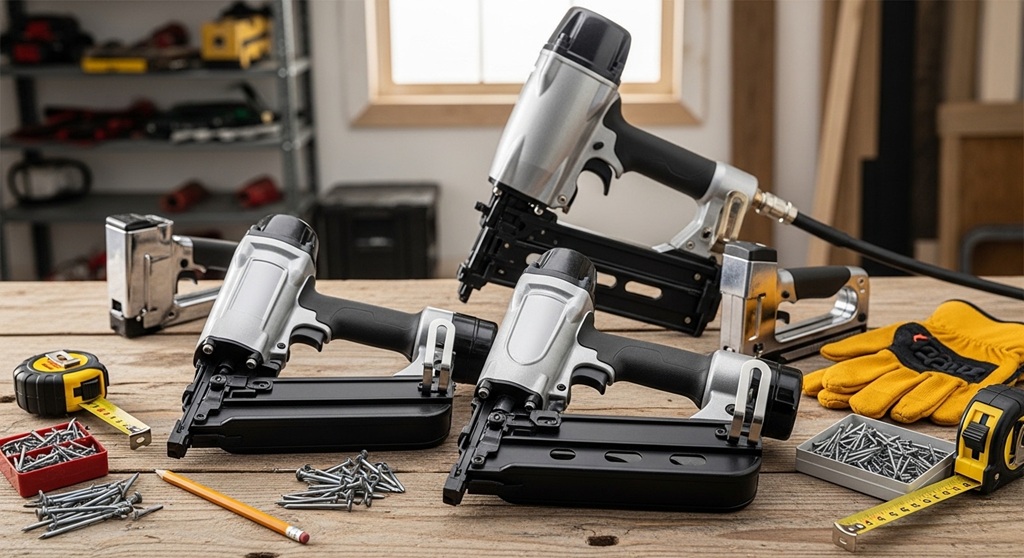
Nail guns are power tools designed to drive nails into wood, drywall, or other materials quickly and accurately. Unlike manual hammers, nail guns reduce physical effort and improve precision, making them one of the most useful DIY woodworking tools and home improvement tools for homeowners.
If you have ever installed trim, built furniture, repaired cabinets, or assembled wooden frames, you know that hammering dozens of nails can be slow and inconsistent. Nail guns solve this problem by using compressed air, electricity, or battery power to drive nails instantly with consistent force.
The demand for nail guns has grown significantly with the rise of DIY culture. According to industry data from Grand View Research, the global power tools market exceeded $33 billion in 2023 and continues to expand as more homeowners perform repairs and renovations themselves.
For DIY enthusiasts, the right nail gun can dramatically speed up projects such as:
- Installing baseboards and trim
- Building wooden furniture
- Repairing fences and decks
- Installing cabinets
- Completing framing work
However, choosing the best nail gun depends on the type of project you plan to complete. Different nail guns serve different purposes. Understanding these differences helps you invest in the right tool.
This guide explains the best nail guns for home projects, how they work, which types are best for DIY repairs, and what features matter most when choosing one.
What Are the Different Types of Nail Guns Used in DIY Woodworking?
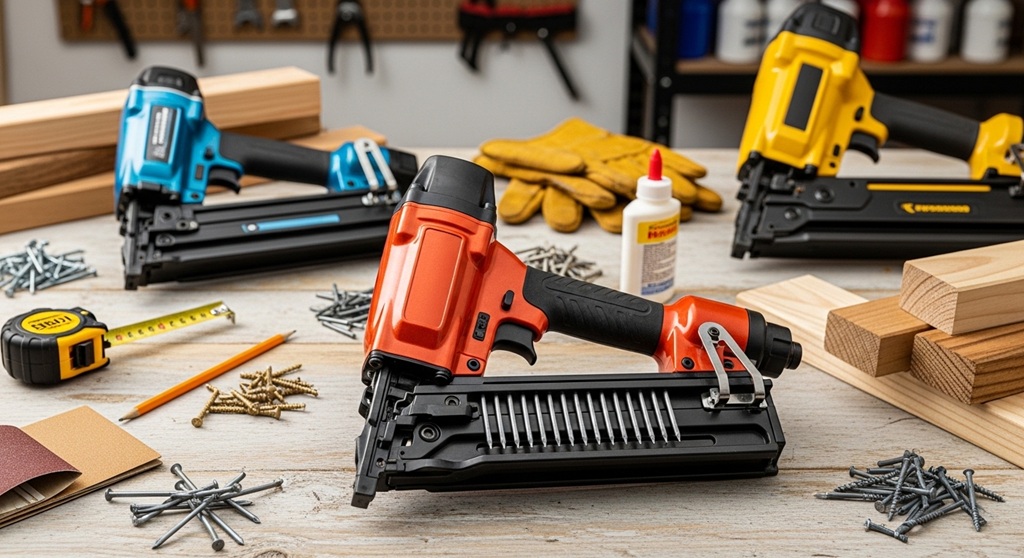
Quick answer: The most common nail guns for DIY home improvement are brad nailers, finish nailers, framing nailers, and pin nailers. Each type is designed for a specific woodworking task.
Choosing the right nail gun begins with understanding the categories available. Each tool uses different nail sizes and power levels.
1. Brad Nailers
Brad nailers use thin 18-gauge nails. They are ideal for lightweight woodworking projects where visible nail holes should be minimal.
Best uses include:
- Installing trim
- Attaching decorative moldings
- Craft and hobby woodworking
- Small cabinet repairs
Because brad nails are thin, they reduce the risk of splitting wood. This makes them a popular choice for beginner DIY users.
2. Finish Nailers
Finish nailers use thicker nails, typically 15-gauge or 16-gauge. They provide stronger holding power than brad nailers.
Common applications include:
- Door frames
- Window casings
- Cabinet installation
- Furniture building
Finish nailers are often considered the most versatile home improvement tools because they balance strength and precision.
3. Framing Nailers
Framing nailers are heavy-duty nail guns designed for structural work.
Typical tasks include:
- Deck construction
- Wall framing
- Shed building
- Fence installation
These nailers drive long nails (2–3.5 inches) with significant force. They are often used in professional construction but can also be useful for large DIY projects.
4. Pin Nailers
Pin nailers use extremely thin 23-gauge nails. These nails leave almost invisible holes.
They are commonly used for:
- Fine woodworking
- Delicate trim installation
- Temporary fastening while glue dries
Because pin nails provide minimal holding power, they are typically used alongside wood glue.
Which Nail Gun Power Source Is Best for DIY Users?
Quick answer: Battery-powered nail guns are best for DIY users because they offer portability and ease of use without requiring compressors or hoses.
Nail guns are powered in three main ways.
Pneumatic Nail Guns
Pneumatic nail guns use compressed air from an external compressor. They are widely used in professional construction because they deliver consistent power.
Advantages:
- Lightweight
- High power
- Reliable for long projects
Limitations:
- Requires an air compressor
- Less portable
- Setup takes time
Cordless Battery Nail Guns
Cordless nail guns run on rechargeable lithium-ion batteries.
Advantages:
- No compressor required
- Portable and convenient
- Good for small to medium projects
According to a study published by Statista, cordless power tools account for more than 60% of consumer tool purchases, reflecting their growing popularity among DIY users.
Gas-Powered Nail Guns
Gas nail guns combine a small fuel cell with battery ignition to drive nails.
Advantages:
- Strong power output
- No air compressor required
Limitations:
- Requires fuel cartridges
- Higher operating cost
For most homeowners, cordless battery nailers provide the best balance between convenience and performance.
What Are the Best Nail Guns for Home Projects and DIY Repairs?
Quick answer: The best nail guns for DIY projects are versatile, lightweight, and capable of handling common woodworking tasks like trim installation and furniture building.
| Nail Gun Type | Best For | Nail Size | DIY Skill Level |
|---|---|---|---|
| Brad Nailer | Trim, crafts, molding | 18 gauge | Beginner |
| Finish Nailer | Cabinets, furniture | 15–16 gauge | Intermediate |
| Framing Nailer | Decks, fences, sheds | 2–3.5 inches | Advanced |
| Pin Nailer | Fine woodworking | 23 gauge | Intermediate |
A common strategy among experienced DIY builders is owning both a brad nailer and a finish nailer. This combination covers most woodworking and repair tasks.
What Features Should You Look for When Buying a Nail Gun?
Quick answer: The most important nail gun features include depth adjustment, firing modes, weight, nail capacity, and safety mechanisms.
Depth Adjustment
This feature controls how deep nails are driven into the material. It helps prevent wood damage or exposed nail heads.
Sequential vs. Contact Firing
- Sequential firing: safer, requires trigger and nose activation.
- Contact firing: faster, allows rapid nailing.
DIY users should prioritize sequential firing because it improves control.
Weight and Ergonomics
Lightweight tools reduce fatigue during long projects. Cordless nail guns typically weigh between 5–8 pounds.
Nail Capacity
Larger magazines reduce reloading frequency. Many nail guns hold between 100–120 nails.
Safety Features
Modern nail guns include safety locks and trigger guards to prevent accidental firing.
How Do Nail Guns Improve Efficiency in DIY Home Repairs?
Quick answer: Nail guns reduce project time, improve accuracy, and create stronger joints compared with manual hammering.
Consider a simple DIY project such as installing baseboards.
A homeowner using a hammer might need 2–3 hours to complete the job due to manual nail placement and alignment.
Using a nail gun reduces the installation time to about 45 minutes because nails are driven instantly and consistently.
Another example comes from woodworking hobbyists building cabinets.
Using nail guns:
- Reduces wood splitting
- Improves joint alignment
- Maintains consistent nail depth
These benefits make nail guns essential DIY woodworking tools for efficient home improvement projects.
What Safety Tips Should DIY Users Follow When Using Nail Guns?
Quick answer: Always wear protective gear, maintain proper grip, and disconnect power when loading nails.
Nail guns are powerful tools and must be used responsibly.
Wear Protective Equipment
- Safety glasses
- Work gloves
- Hearing protection
Check Materials Before Firing
Avoid nailing into wood containing hidden metal objects such as screws.
Maintain Proper Grip
Always keep hands away from the firing area.
Disconnect Power Before Maintenance
Remove batteries or disconnect compressors before clearing jams or reloading nails.
Following these precautions significantly reduces the risk of accidents.
Conclusion: Should Every DIY Enthusiast Own a Nail Gun?
Yes. Nail guns have become essential tools for homeowners who regularly handle woodworking and repair projects. They improve speed, accuracy, and structural consistency compared with traditional hammering.
For most users, starting with a brad nailer or finish nailer offers the best value because these tools handle the majority of home improvement tasks. As projects become larger, framing nailers can be added to the toolkit.
The growth of DIY culture and modern cordless technology has made nail guns more accessible than ever. Today’s tools are portable, safe, and easy to operate even for beginners.
If you want to complete repairs faster, improve woodworking quality, and reduce physical effort, investing in the right nail gun is a practical step.
Ready to upgrade your DIY toolkit? Explore reliable nail guns and build a set of efficient home improvement tools that make every project easier and more precise.
Frequently Asked Questions About Nail Guns for DIY Projects
1. What is the best nail gun for beginners?
The best nail gun for beginners is an 18-gauge brad nailer. It is lightweight, easy to control, and suitable for trim work, crafts, and small woodworking projects.
2. Are cordless nail guns powerful enough for home projects?
Yes. Modern cordless nail guns powered by lithium-ion batteries provide sufficient power for most DIY tasks such as furniture building, trim installation, and cabinet work.
3. Can one nail gun handle all woodworking tasks?
No. Different projects require different nail sizes. Brad nailers work for small projects, while finish nailers and framing nailers are needed for heavier construction.
4. Do nail guns damage wood?
When used correctly with proper depth adjustment, nail guns minimize wood splitting and create clean, consistent nail placements.
5. Are pneumatic nail guns better than cordless ones?
Pneumatic nail guns deliver consistent power and are preferred by professionals. However, cordless nail guns are more convenient for DIY users because they do not require air compressors.
6. What safety gear is required when using nail guns?
Essential safety gear includes safety glasses, gloves, and hearing protection. These reduce the risk of injury during operation.
7. How long do nail guns typically last?
High-quality nail guns can last 8–10 years with proper maintenance. Regular cleaning, lubrication, and proper storage extend tool lifespan.
Read More Also: Red and Yellow Chapter 8 Chevrons – Design Visibility Logic
Find out: How Routine Carpet Cleaning Can Improve Indoor Air Quality