
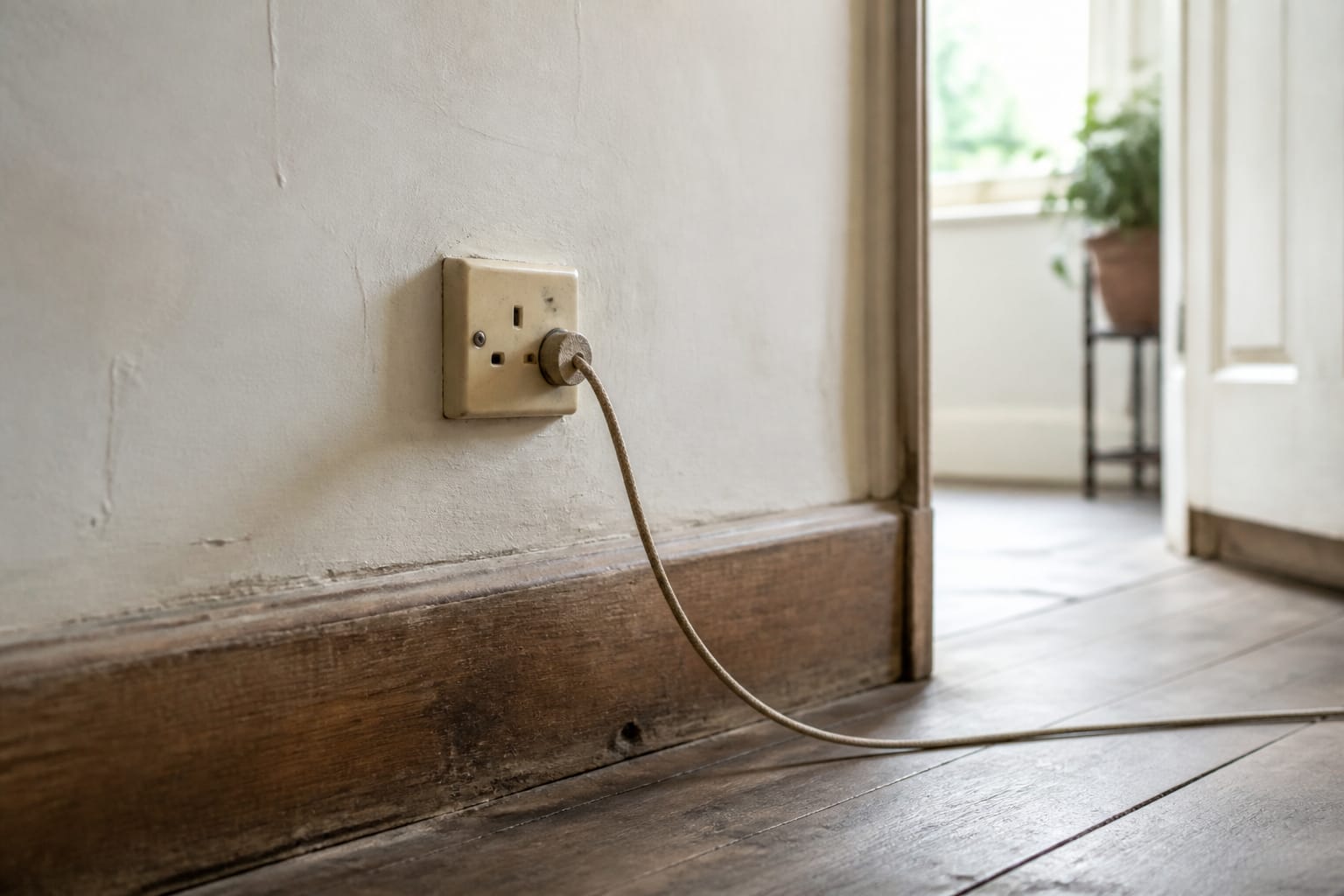
Even the oldest Williamsport homes have wiring inside their walls. Much of that wiring was installed decades ago to serve different purposes and often cannot safely and efficiently serve modern electrical needs of homes today.
Spotting Knob-and-Tube Wiring
You can check for knob-and-tube wiring in your home’s attic or basement. It was typically used in homes built prior to the 1950s and consists of ceramic knobs and tubes that hold bare copper wires apart. Rubber-like cloth insulation covers the wires. It was not meant to handle modern appliance loads. The increasing number of electrical faults in older homes has prompted the insurance industry to start encouraging the removal of knob-and-tube wiring.
Checking For Aluminium Branch Wiring
Many older homes have aluminium branch wiring that was installed in the 1960s & 1970s. The aluminium wiring was used in place of copper to help reduce cost. The aluminium expands and contracts with heat and cold. Over time, this can cause the connections at the switches and outlets to become loose. When a connection becomes loose, the resistance of the circuit increases. As the resistance of the circuit increases, heat begins to generate. This heat can cause serious damage in short order.
What Two-Prong Outlets Tell You
Two pronged outlets lack a grounding hole in the third prong position. This means the electrical circuit does not contain a dedicated grounding wire to the service panel. When a short occurs in an appliance that has been wired with no grounding wire, the short has no safe path to ground and can travel through other objects, including people. A third prong grounding adapter does not solve this problem.
Comparing Fuse Boxes And Breaker Panels
Old fuse boxes generally do not have as much capacity as new breaker panels. Most homes today have air conditioning, multiple electric ranges and many electrical devices that constantly draw power to charge. This would require a 100 to 200 amp service. Old fuse boxes require the physical removal of a fuse that has failed. Homeowners have been known to try to prevent fuse failures by using higher rated fuses. The National Fire Protection Association (NFPA) states that outdated home wiring is one of the causes of home electrical fires and that panel capacity is a major factor.
Reading The Physical Warning Signs
Warm switch plates or outlets, brown or black scorch marks on outlets or walls, and a burning smell coming from an outlet can all indicate that an overloaded wire is working too hard. Heated wires can soon catch on fire, causing serious damage to your home and putting you and your family at risk. Overheated wires are identified in OSHA electrical safety standards for workplaces, where damaged wire is considered an immediate hazard – and therefore to be avoided at all costs in homes too.
Booking A Proper Inspection
Remember that none of these observations are a substitute for an actual inspection completed by qualified electricians that can properly open up your panel and test out each of your electrical circuits one by one.
For Electrician Williamsport PA, visit https://bameixel.com/electricians-williamsport/.
In a few minutes you can get a pretty good idea whether or not your older home’s electrical system is worth having inspected by a qualified electrician.