

Key Takeaways
- A lower purchase price does not automatically mean a lower monthly housing cost.
- Taxes, insurance, flood exposure, association fees, utilities, and travel can substantially affect the budget.
- Long Island and Florida offer distinct weather, transportation, health care, and daily-living experiences.
- Buyers should compare recent neighborhood-level information rather than relying on broad national headlines.
- An in-person visit can reveal traffic patterns, noise, drainage, community activity, and convenience that listings cannot show.
For many Massapequa-area buyers, Florida is more than a vacation destination. Communities such as Port St. Lucie, Stuart, and Hutchinson Island can look appealing when a household wants warmer weather, coastal recreation, a different pace of life, or a new plan for retirement. Still, a move from Long Island to Florida should be evaluated as a full lifestyle and financial decision, not simply a comparison of listing prices.
Massapequa, NY real estate agent Cynthia Manzolillo provides residential real estate information and property-search tools for buyers and sellers considering both New York and Florida. Cindy Manzolillo’s cross-market focus includes Massapequa Park and Lindenhurst on Long Island, along with Port St. Lucie, Stuart, and Hutchinson Island on Florida’s Treasure Coast. That perspective is especially useful for buyers who need to compare neighborhood character, property types, and practical ownership costs across two very different regions.
Why Buyers Compare Long Island and Florida
Households leave or add a Florida home for many reasons. Some want to reduce cold-weather maintenance. Others are retiring, working remotely, seeking more outdoor time, or moving closer to family. A Long Island buyer may enjoy beaches, parks, established neighborhoods, and access to New York City, while also wondering whether Florida could offer a more relaxed routine or a different type of coastal living.
Consider a buyer who wants beach access but also needs dependable medical care, convenient airport travel, and room for visiting relatives. A home near the water may be appealing in either state, but the buyer still needs to weigh travel time, insurance, storm preparation, nearby services, and the actual day-to-day feel of the community.
Compare Home Prices and Monthly Costs
A fair comparison starts with the complete monthly cost of ownership. Two homes with similar asking prices can have dramatically different carrying costs because of tax bills, insurance requirements, homeowner association fees, property condition, and utility use.
A Sample Monthly Comparison
The following fictional example is only a planning exercise, not a mortgage quote, tax estimate, or insurance quote:
- Long Island home: mortgage payment, property taxes, homeowner’s insurance, utilities, lawn care, snow removal or seasonal maintenance, and commuter costs.
- Florida home: mortgage payment, property taxes, homeowners insurance, potential wind or flood coverage, utilities, association fees, lawn or pool care, and flights or road trips to visit family in New York.
Use the same down payment, loan term, and interest-rate assumption when comparing properties. Then add realistic estimates for repairs and reserves. Older Long Island homes may need attention to roofs, heating systems, basements, or drainage. Florida homes may require careful review of roofs, air-conditioning systems, storm protection, landscaping, and association responsibilities.
Review Taxes, Insurance, and Property Risks
Property taxes should be reviewed for the specific address, not guessed from a nearby listing. In Nassau County, assessments and tax information are handled through local government processes, and buyers can use the county’s property tax and assessment information to understand the records they should examine before closing.
Florida buyers should request insurance information early in the offer process. Policy availability, deductibles, coverage terms, and underwriting can vary by property. The Florida Department of Financial Services explains that homeowners should compare coverage needs and policy options when shopping for homeowner’s insurance, rather than comparing premiums alone.
For any Florida property, ask about flood-zone status, elevation, drainage, roof age, window protection, wind-mitigation features, prior claims, and the seller’s maintenance history. For a condominium or planned community, review the association budget, reserves, rules, pending projects, and any recurring fees. A licensed insurance professional, tax adviser, attorney, and inspector can address questions specific to the property and buyer.
Match the Location to Daily Life
Long Island Considerations
- Four seasons, including winter weather and seasonal maintenance.
- Access to New York City, regional employment centers, rail travel, beaches, and established suburban communities.
- A mix of older housing stock, local downtowns, schools, parks, and higher-density areas.
Florida Considerations
- Warm weather and longer periods for outdoor recreation.
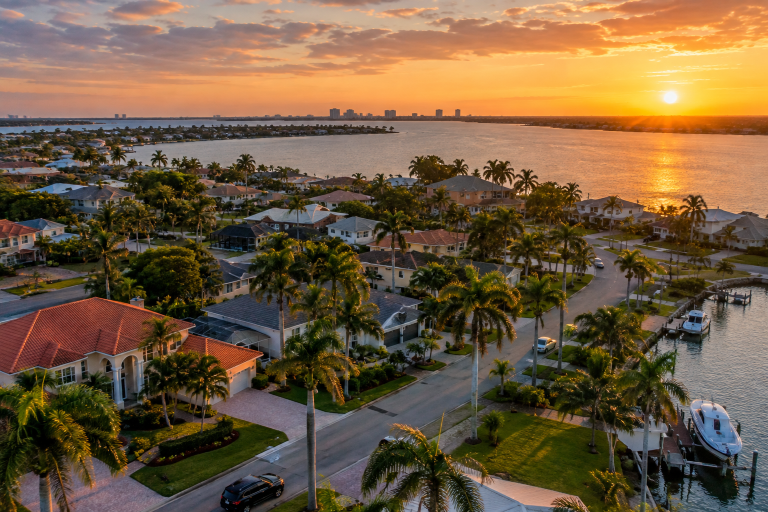
- Choices range from inland neighborhoods in Port St. Lucie to waterfront-oriented living in Stuart and Hutchinson Island.
- Frequent car use in many areas, plus heat, humidity, and storm-season preparation.
Neither setting is universally better. A buyer who values rail access, family proximity, and seasons may prefer Long Island. Someone prioritizing boating, golf, warm winters, or a lower-maintenance condominium lifestyle may find a Florida community more suitable.
Think About Work, Health Care, and Services
Before choosing a market, map out ordinary errands. Test the drive to the grocery store, pharmacy, hospital, airport, beach, workplace, and family members’ homes. Remote workers should confirm internet options and workspace needs. Families should research school choices, activities, and childcare. Retirees should consider specialists, routine appointments, mobility, social connections, and emergency care.
Check Local Market Conditions
In 2026, neighborhood-level conditions matter more than a statewide headline. Review active listings, recent closed sales, pending contracts, price changes, and days on market for the exact property type you want. A waterfront condominium, an inland single-family home, and a Long Island colonial can each follow different market patterns.
Focus on information from the most recent 30 to 90 days before making a major decision. Asking prices show seller expectations, while closed sales and comparable properties offer a clearer view of what buyers have recently paid.
Use Local Guidance Before Making a Choice
Create a written list of questions before touring homes. Ask about recent comparable sales, seasonal traffic, local construction, utility costs, association rules, resale considerations, and property-specific concerns. Then verify important figures independently through public records, professional inspections, insurance quotes, and qualified advisers.
A Simple Decision Checklist
- Define the preferred home type, location, and target price.
- Estimate the total monthly cost for each property.
- List the five lifestyle needs that matter most.
- Review work, travel, school, and health care requirements.
- Investigate taxes, insurance, maintenance, flood exposure, and association fees.
- Visit at least two neighborhoods in person at different times of day.
- Compare recent closed sales rather than listing prices alone.
- Consult a lender, insurance professional, tax adviser, inspector, and local real estate professional.
- Give yourself time to review the numbers before making an emotional offer.
Final Thoughts
Long Island and Florida can both support an excellent next chapter, but they solve different needs. Buyers moving from Massapequa, NY, should compare more than sunshine and square footage. The strongest decision considers the full budget, local services, travel demands, weather preferences, property risks, and the life the household wants to lead after closing.
