Florida is one of the most popular golf destinations in the world. The courses are beautiful, the greens are fast, and the weather is warm almost year-round. However, if you play in Florida between June and September, you already know what comes with that warmth: rain. Lots of it.
Florida’s rainy season is not a gentle drizzle. It is sudden, heavy, and often accompanied by lightning. An afternoon round can shift from sunny skies to a downpour in under 20 minutes. For golfers who play regularly through the season, having the right equipment is not optional. It is essential.
A quality golf umbrella is the foundation of any smart rainy-season setup. This guide covers everything you need to know to choose the right one, use it effectively, and stay comfortable on the course no matter what the sky throws at you.
Understanding Florida’s Rainy Season on the Golf Course
Florida receives more rainfall than any other state in the continental United States. The rainy season typically runs from June through September, with July and August being the wettest months. Afternoon thunderstorms are the norm during this period, often building quickly from the southwest and moving fast across the course.
What makes Florida rain unique for golfers is the combination of heavy precipitation, high humidity, and frequent lightning. A standard compact umbrella is simply not built for these conditions. The wind that accompanies Florida storms can be strong enough to flip a lightweight umbrella inside out in seconds.
Therefore, golfers who play regularly through the summer need to think differently about their gear. Understanding the conditions is the first step toward choosing equipment that actually holds up.
What Makes a Golf Umbrella Different from a Regular One
Not all umbrellas are created equal. A golf umbrella is built specifically for outdoor sports use, and the differences from a standard umbrella are significant.
Size and Coverage
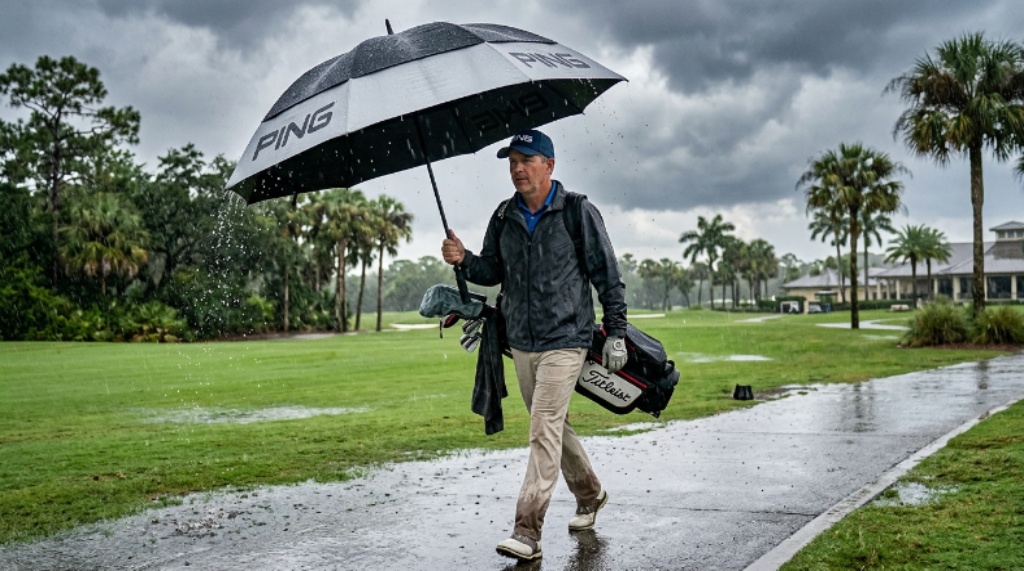
Golf umbrellas are large. Most have a canopy diameter between 60 and 68 inches. This size is intentional. It provides enough coverage to protect not only the golfer but also their bag, clubs, and any playing partner standing nearby. A regular umbrella simply cannot offer that level of coverage.
The larger canopy also means you can hold the umbrella with one hand while pulling your trolley or preparing a shot without losing protection. This practicality matters enormously on an active round.
Frame and Shaft Construction
The frame of a golf umbrella must withstand sustained wind and heavy rain. Quality models use fiberglass or carbon fiber shafts and ribs instead of metal. Fiberglass is particularly valuable in Florida because it is non-conductive. Additionally, fiberglass ribs flex under wind pressure rather than snapping, which extends the life of the umbrella significantly.
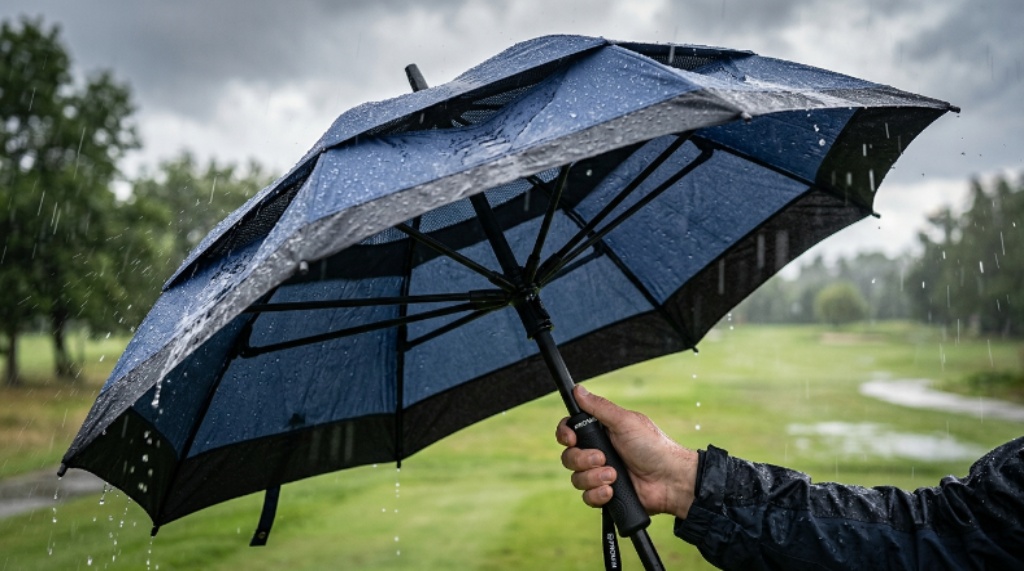
A double-canopy design takes this a step further. The inner and outer layers of the canopy create a vented system that allows wind to pass through. This dramatically reduces the chance of the umbrella inverting during a gust and makes it far more stable in Florida’s unpredictable storms.
Handle Design
A golf umbrella handle needs to be comfortable for extended use and secure when wet. Rubberized or ergonomic grip handles perform best in rain. Crook handles are useful for hanging the umbrella from your bag when not in use, freeing up your hands between shots.
Key Features to Look for When Buying a Florida Golf Umbrella
Choosing the right umbrella involves more than picking the biggest one available. For Florida conditions specifically, certain features matter more than others.
Wind Resistance Rating
Some manufacturers test and publish wind resistance ratings for their umbrellas. Look for models rated to withstand winds of at least 40 to 55 mph. Florida summer storms can push gusts well beyond this, but a higher-rated umbrella will hold its shape far longer than one without any wind testing.
Canopy Fabric
The canopy fabric affects both waterproofing and durability. Pongee fabric and vented nylon are the most common materials in quality golf umbrellas. Both repel water effectively and dry quickly. Additionally, UV protection is worth considering in Florida. Even during the rainy season, the sun returns quickly after a storm, and UV-protective canopy fabric shields your skin during breaks between showers.
Auto-Open Mechanism
A fast-open mechanism is a practical feature that gets overlooked. When a storm rolls in quickly, you want your umbrella open in seconds. Most quality golf umbrellas feature a single-button auto-open system that deploys the canopy instantly. This small feature makes a real difference when rain arrives with little warning.
Weight and Pack Size
You carry your umbrella for an entire round, either in your hand or in your bag. A heavy umbrella becomes tiring quickly. Look for models that balance durability with a manageable weight, ideally under 600 grams. The umbrella should also fit comfortably in an external bag pocket or strap attachment without catching on other equipment.
How to Use a Golf Umbrella Effectively in Florida Storms
Owning a good umbrella is only part of the solution. Knowing how to use it well in Florida’s specific weather patterns makes a meaningful difference.
Watch the Sky, Not Just the Radar
Florida storms build and move fast. By the time a weather app alert arrives, the storm may already be on top of you. Train yourself to scan the sky regularly during your round, particularly to the south and southwest in the afternoon. Dark, towering cloud formations are your warning signal. Give yourself time to prepare before the rain hits.
Stop Play During Lightning
This point cannot be overstated. A golf umbrella, even a fiberglass one, does not protect you from lightning. If you hear thunder or see lightning, stop play immediately. Move to the nearest shelter or your cart and wait for the all-clear signal from the course. Florida has more lightning strikes than any other state, and the golf course is one of the most exposed places you can be during a storm.
Protect Your Grips and Glove
Rain affects your grip on the club. Keep a rain glove in your bag during the rainy season. Rain gloves are designed to perform better when wet, unlike standard leather gloves which become slippery. Additionally, a small towel clipped to your bag keeps your grips dry between shots, which protects both your equipment and your swing consistency.
Building a Complete Rainy Season Setup Around Your Umbrella
A golf umbrella is the centerpiece of your wet-weather kit, but it works best as part of a complete system. Effective golf rain gear and golf weather accessories work together to keep you comfortable and competitive through the worst of Florida’s summer weather.
Consider adding the following to your bag for the rainy season:
- A waterproof golf bag cover or a rain hood that fits over your bag opening
- Waterproof or water-resistant golf shoes with strong traction for wet fairways
- A rain jacket that is breathable and packable enough to fit easily in your bag
- Extra dry towels stored in a waterproof zipper pocket
- A waterproof scorecard holder or a pencil with a clip-on cover
Each of these items solves a specific problem that rain creates on the course. Together with a quality umbrella, they form a setup that lets you focus on your game rather than the conditions.
Top Mistakes Florida Golfers Make with Rain Gear
Even experienced golfers make avoidable mistakes when it comes to wet weather preparation. Here are the most common ones to watch for.
Waiting too long to open the umbrella is one of the biggest errors. By the time rain is falling heavily, your grips, glove, and scorecard are already wet. Open your umbrella at the first sign of rain, not when the downpour is already soaking you.
Storing the umbrella wet is another common problem. A golf umbrella stored in a bag while still damp can develop mildew and weaken the canopy fabric over time. After each round, open the umbrella fully and allow it to air dry before packing it away.
Additionally, choosing style over function is a tempting trap. A sleek, lightweight umbrella may look appealing, but if it cannot handle Florida’s wind and rain, it will fail when you need it most. Always prioritize structural quality and weather performance over appearance.
Conclusion
Playing golf through Florida’s rainy season is completely manageable with the right preparation. A quality golf umbrella is the most important piece of equipment you can carry during this period. Focus on size, frame construction, canopy material, and wind resistance when making your choice. A double-canopy, fiberglass-framed model with a large coverage area is the gold standard for Florida conditions.
Pair your umbrella with solid golf rain gear and complementary golf weather accessories to build a setup that protects your equipment, keeps your grips dry, and lets you play through most summer showers without disruption. Stay alert to changing conditions, always respect lightning, and prepare before the rain arrives rather than after.
With the right gear and the right habits, Florida’s rainy season becomes a minor inconvenience rather than a reason to leave the course.
Frequently Asked Questions
What size golf umbrella is best for Florida’s rainy season?
A canopy diameter of at least 62 inches is recommended for Florida conditions. This provides enough coverage for both you and your bag. Double-canopy models in this size range offer the best combination of coverage and wind resistance for heavy summer storms.
Is a fiberglass umbrella really safer during lightning?
Fiberglass is non-conductive, which makes it a safer choice than a metal-shafted umbrella in a lightning event. However, no umbrella offers protection from a direct lightning strike. Always seek proper shelter when lightning is present and do not rely on any umbrella as a lightning safety device.
How do I keep my golf grips dry during a rainy round?
Use a small towel clipped to your bag and wipe each grip before you address the ball. Pair this with a rain glove, which grips better when wet than a standard glove. Additionally, keeping your umbrella open between shots prevents your grips from getting saturated in the first place.
Can I leave my golf umbrella in a hot car between rounds?
Extended exposure to extreme heat can weaken the canopy fabric and frame joints over time. It is better to store your umbrella in a cool, dry place between rounds. If you must leave it in a vehicle, keep it in the boot rather than on a back seat exposed to direct sunlight.
How often should I replace my golf umbrella?
A quality golf umbrella with proper care can last three to five years of regular use. Replace it sooner if the canopy fabric tears, the ribs begin to bend without returning to shape, or the waterproofing noticeably deteriorates. Reapplying a fabric waterproofing spray can extend the life of the canopy by one to two additional seasons.